V/Q Scan vs CTPA for Pulmonary Embolism in Pregnancy
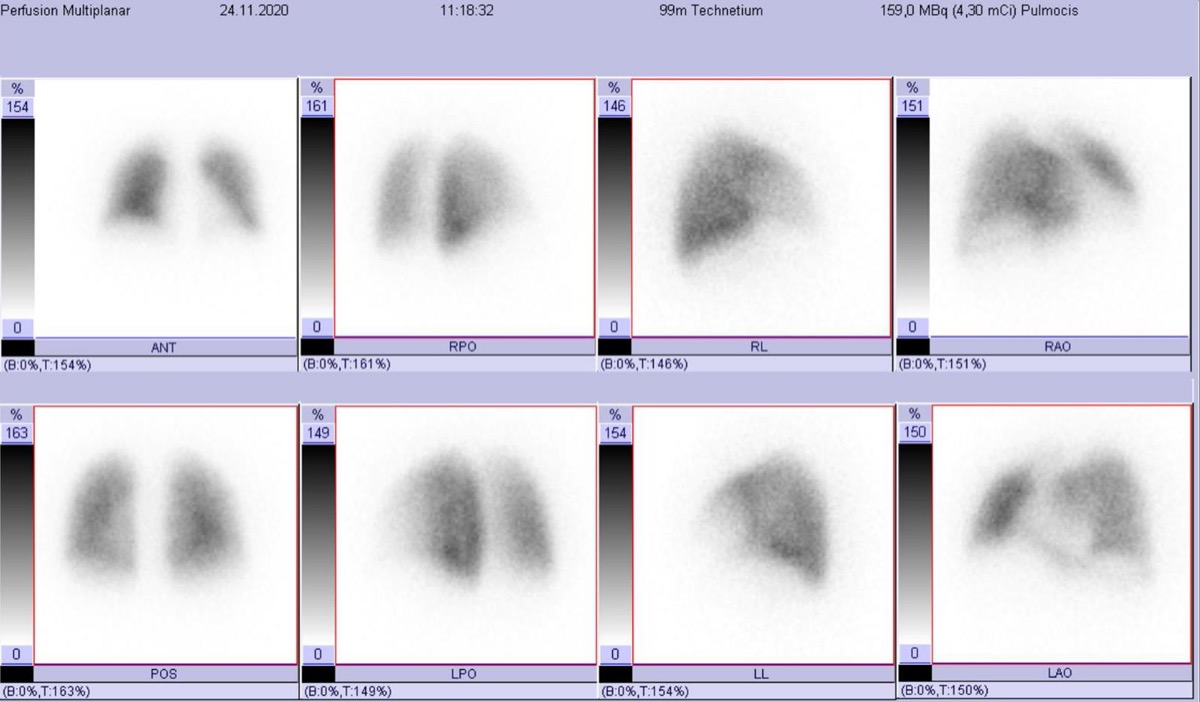
CC BY-SA 4.0 · Wikimedia Commons · source file
Question
A 28-year-old pregnant patient (32 weeks gestation) presents with dyspnea and pleuritic chest pain. Duplex ultrasound is negative for DVT. Which imaging modality is PREFERRED for evaluating PE in this patient?
- ACT pulmonary angiography (CTPA) — always preferred in all populations
- BMRI of the chest — no radiation
- CV/Q lung scan — lower radiation dose to the fetus compared to CTPA, and lower maternal breast radiation
- DEmpiric anticoagulation without imaging
Show the answer and explanation
C. V/Q lung scan — lower radiation dose to the fetus compared to CTPA, and lower maternal breast radiation
In pregnant patients being evaluated for PE, the V/Q lung scan delivers LOWER radiation dose to the fetus (estimated 0.01–0.13 mGy) compared to CTPA (0.3–0.66 mGy) and also delivers significantly LOWER radiation dose to the maternal breast (important to minimize lifetime breast cancer risk). If the chest X-ray is normal, a V/Q scan is generally preferred in pregnant patients. If the CXR is abnormal (showing infiltrate, effusion, atelectasis), CTPA may be preferred to avoid indeterminate V/Q results. Either test is acceptable — the decision should be individualized based on CXR appearance, clinical probability, and institutional protocols.
More lung v/q imaging images
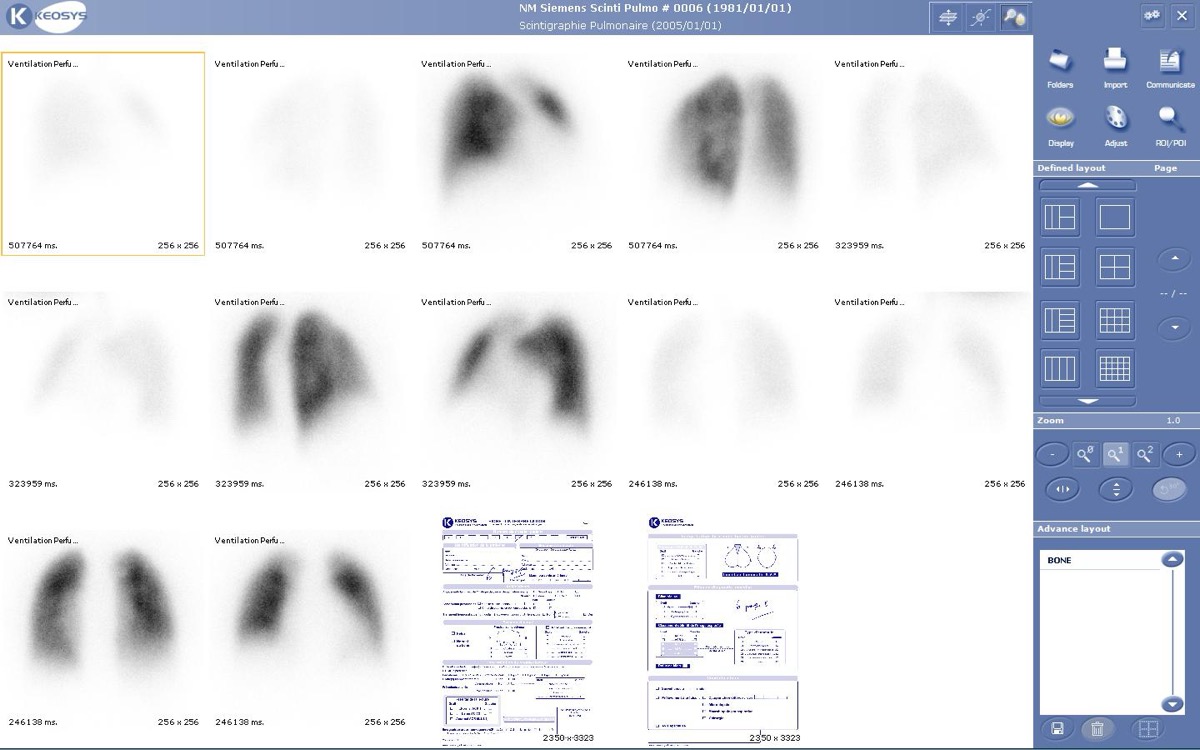 Ventilation Agents: Tc-99m DTPA Aerosol vs Xe-133
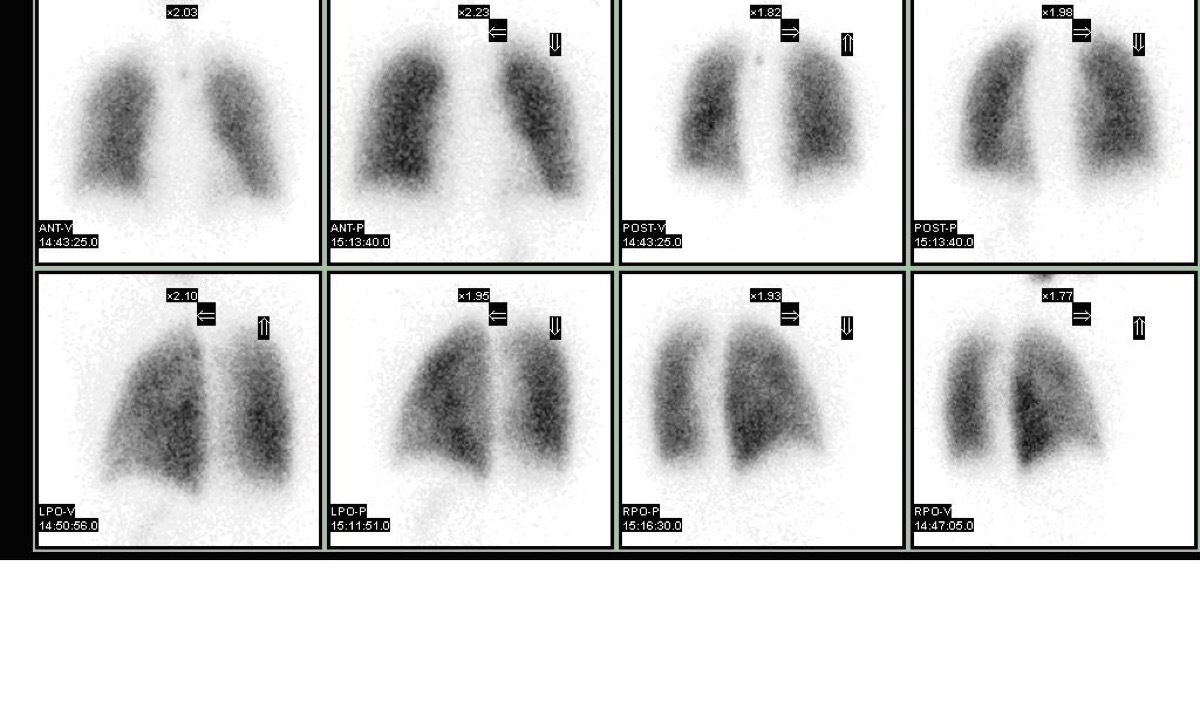 Intermediate-Probability V/Q Scan
Brain and Kidney MAA Uptake: Right-to-Left Shunt
Tc-99m MAA Injection Technique
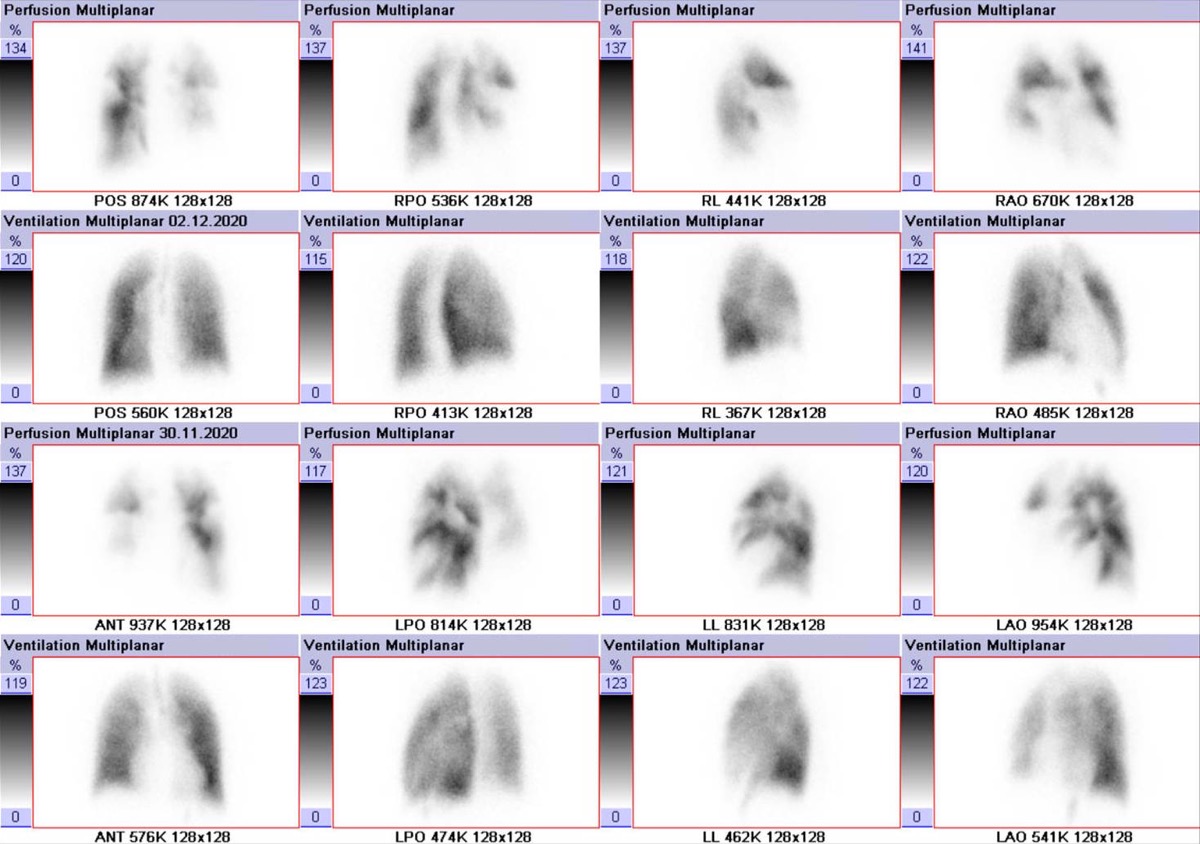 PIOPED II: High-Probability V/Q with High Pretest Probability
Wedge-Shaped Pleural-Based Defect: Pulmonary Embolism
All 130 nuclear medicine images by category →
Practise image interpretation in the app
All 130 images as an interactive quiz, alongside 500 NMTCB and ARRT(N) questions with worked explanations, case studies and timed mock exams. 25 questions are free, no card and no account.