Avascular Necrosis of the Femoral Head on Bone Scan
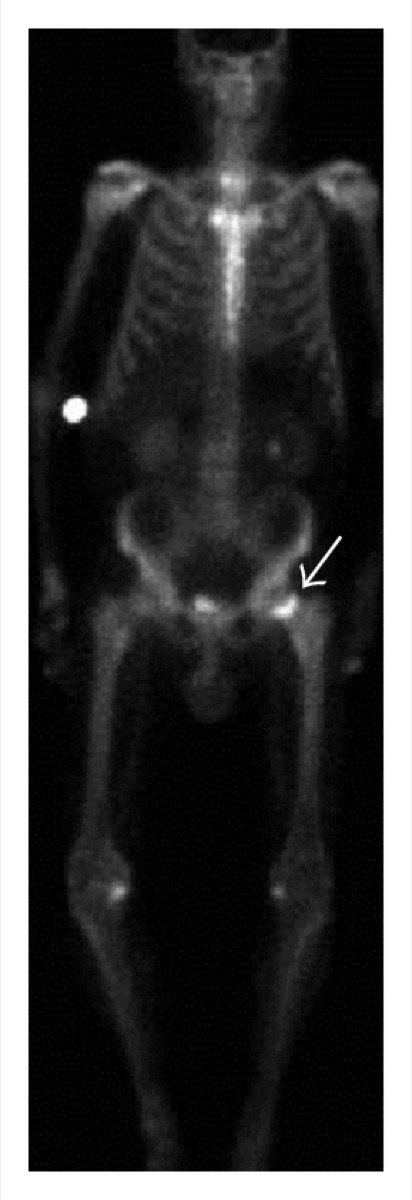
CC BY 3.0 · Jarraya et al. / Wikimedia Commons · source file
Question
A bone scan is performed in a patient with acute hip pain and sickle cell disease. The study shows a 'cold' (photopenic) area in the right femoral head. This finding on bone scan is most consistent with:
- ANormal physiologic variation in the femoral head
- BAvascular necrosis (AVN) — early ischemic phase with absent blood flow to the femoral head
- CStress fracture of the femoral neck
- DSeptic arthritis of the hip joint
Show the answer and explanation
B. Avascular necrosis (AVN) — early ischemic phase with absent blood flow to the femoral head
Avascular necrosis (AVN) of the femoral head in its EARLY ischemic phase presents as a photopenic (cold) area on bone scan, reflecting absent blood flow and no osteoblastic activity. This cold phase is the classic early finding. Later, as the body attempts repair (creeping substitution), the scan shows increased uptake ('hot' phase) surrounding the cold defect — or a mixed pattern. In sickle cell disease, AVN results from vascular occlusion by sickled erythrocytes. MRI is more sensitive and specific for AVN than bone scan.
More bone imaging images
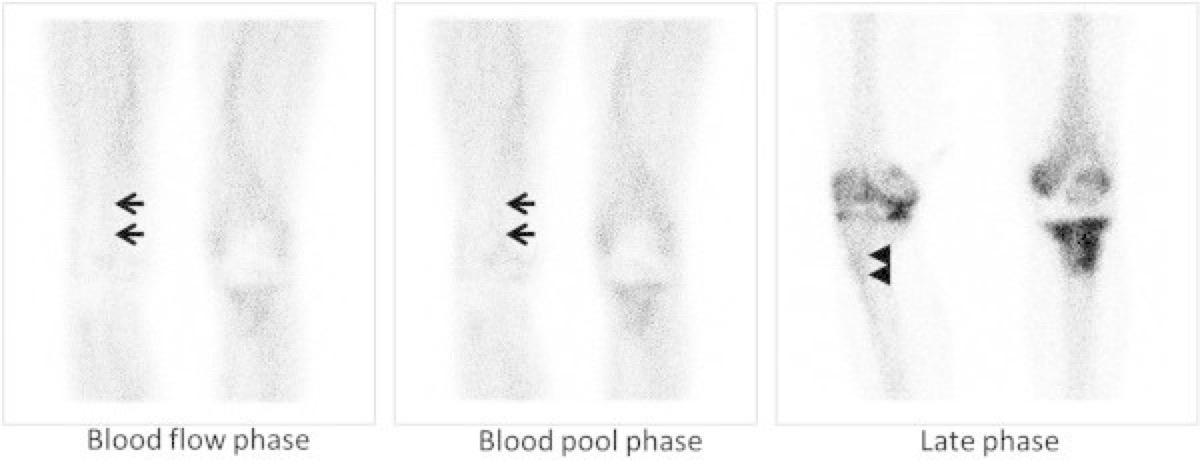 Flare Phenomenon on Bone Scan After Chemotherapy
 Bone Scan for Staging High-Risk Prostate Cancer
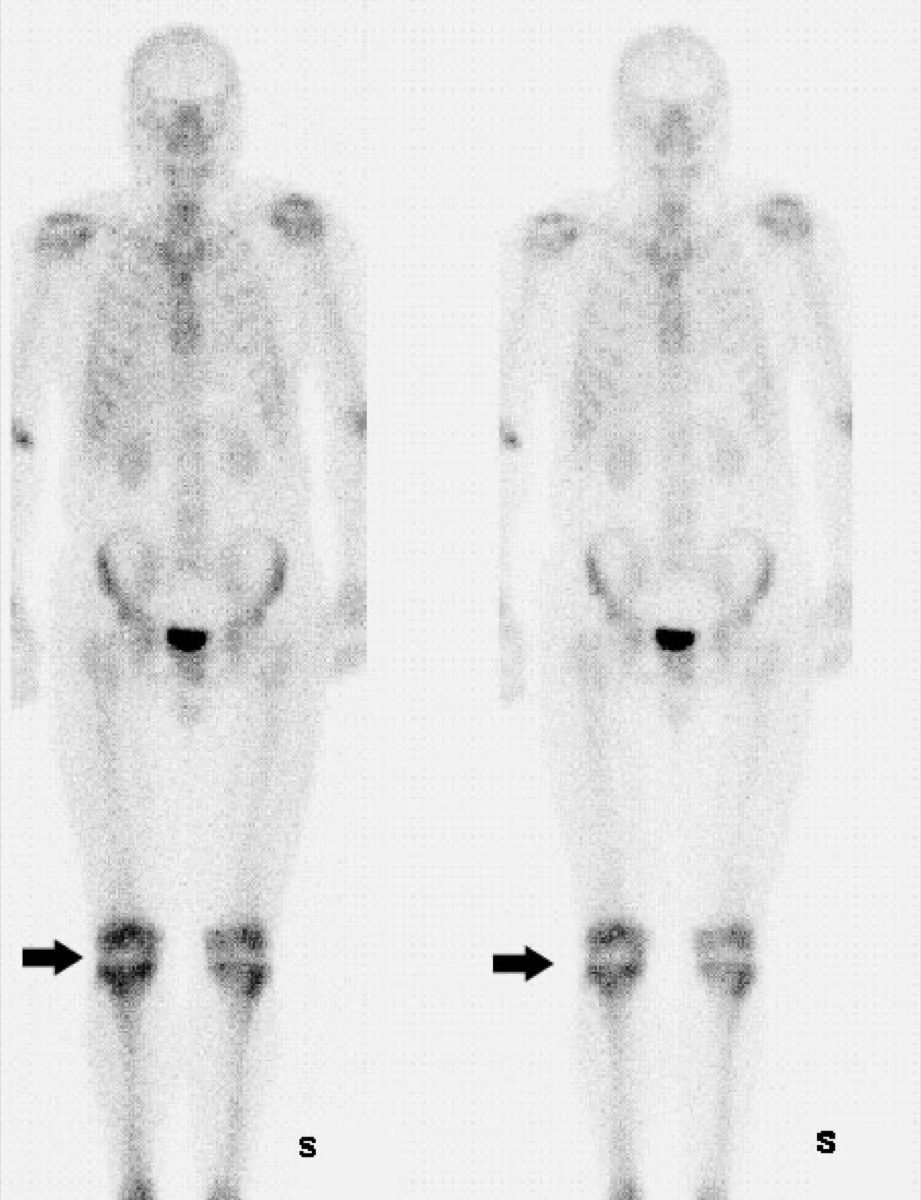 Fibrous Dysplasia on Bone Scan (Shepherd’s Crook)
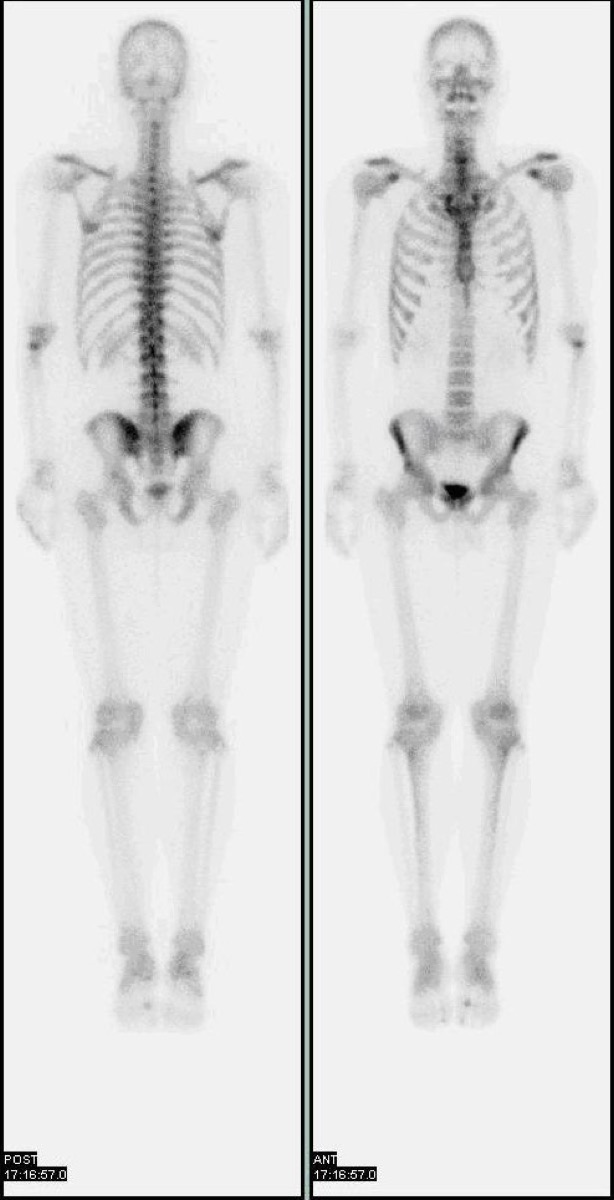 Tc-99m Physical Half-Life
Periprosthetic Uptake After Hip Replacement
Bone Scan Timing: When to Acquire Delayed Images
All 130 nuclear medicine images by category →
Practise image interpretation in the app
All 130 images as an interactive quiz, alongside 500 NMTCB and ARRT(N) questions with worked explanations, case studies and timed mock exams. 25 questions are free, no card and no account.