Tc-99m Physical Half-Life
CC BY 3.0 · Myohan / Wikimedia Commons · source file
Question
Tc-99m is the most widely used radionuclide in nuclear medicine. What is its physical half-life?
- A2.1 hours
- B6.02 hours
- C13.2 hours
- D24 hours
Show the answer and explanation
B. 6.02 hours
Tc-99m has a physical half-life of 6.02 hours, making it ideal for nuclear medicine imaging. It decays by isomeric transition (IT) to Tc-99, emitting a 140 keV gamma ray — the optimal energy for SPECT gamma cameras (high enough for adequate tissue penetration, low enough for efficient collimation). It is produced from Mo-99/Tc-99m generators ('moly cows'), which are replenished weekly. Its 6-hour half-life allows completion of studies with reasonable radiation dose and rapid patient clearance. Compare: I-123 = 13.2 hrs; F-18 = 110 min; Ga-68 = 68 min; I-131 = 8 days.
More bone imaging images
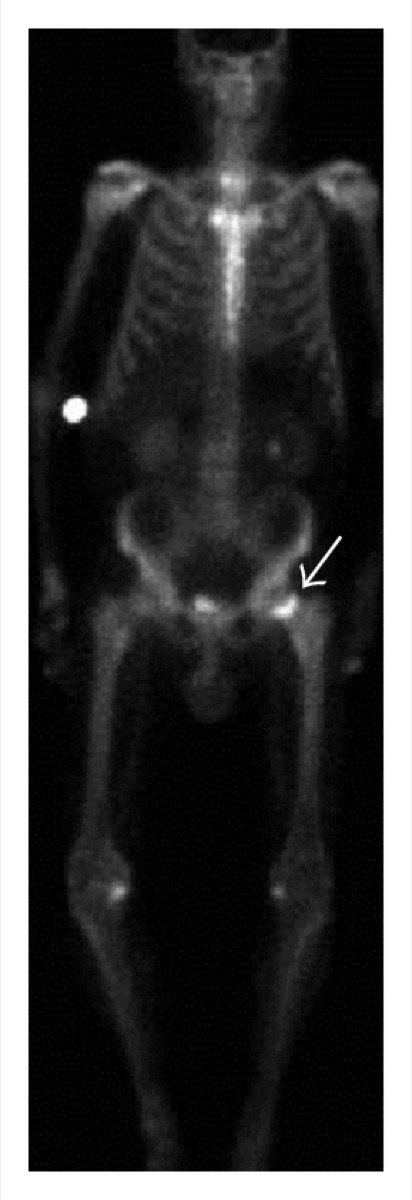 Periprosthetic Uptake After Hip Replacement
 Bone Scan Timing: When to Acquire Delayed Images
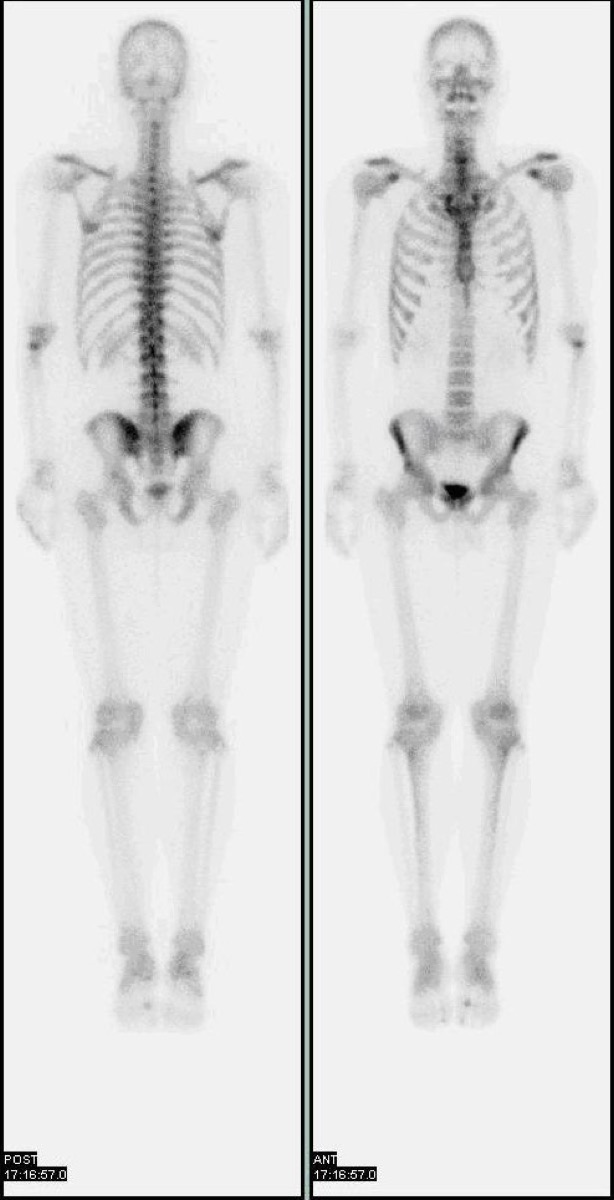
Normal Whole-Body Bone Scan (Tc-99m MDP)
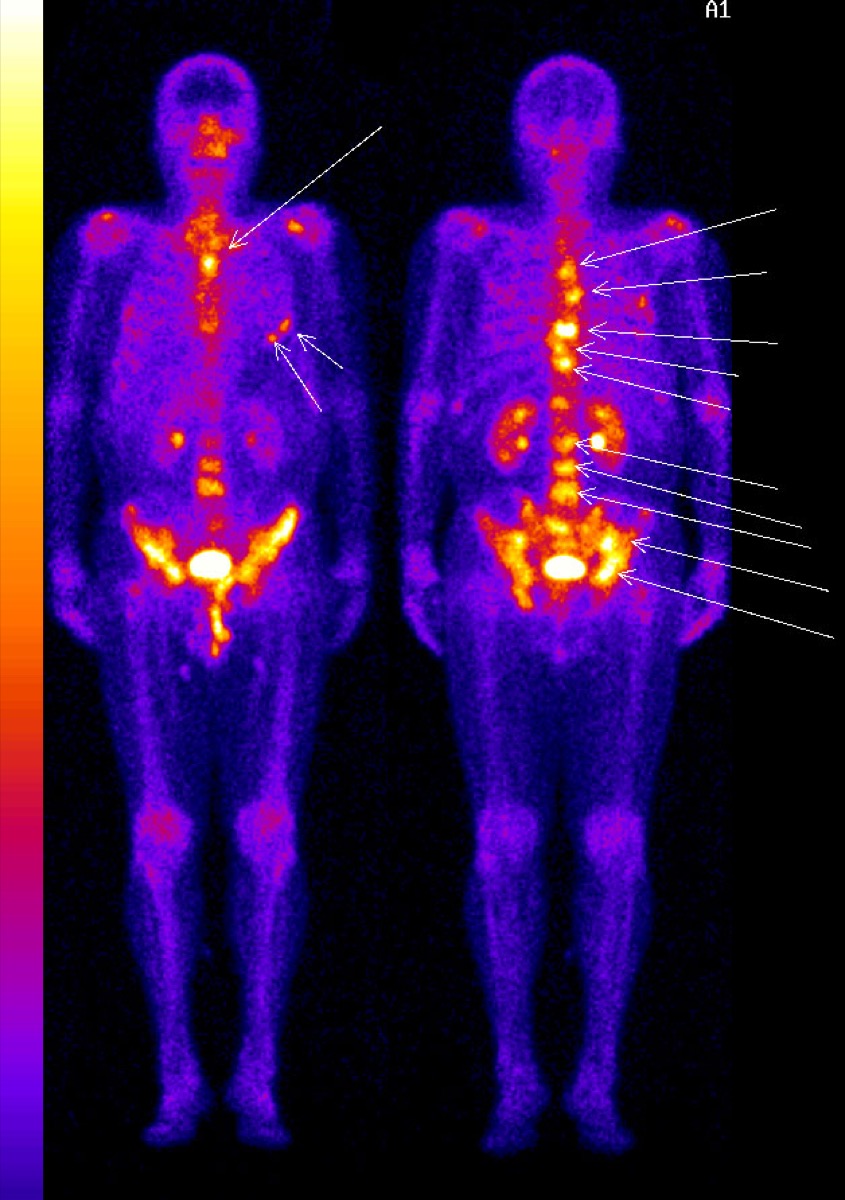 Diffuse Skeletal Metastases on Bone Scan
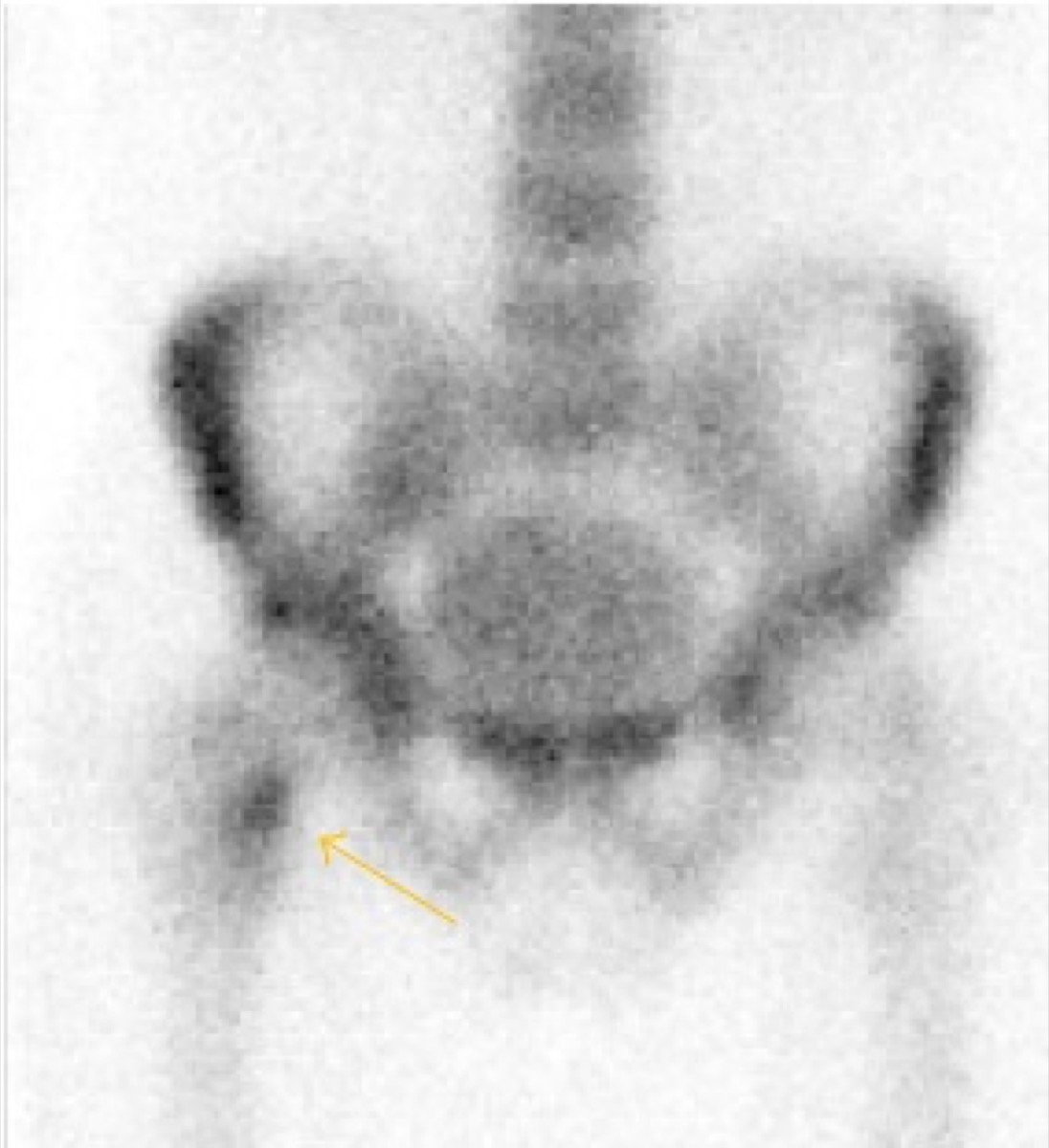 Femoral Neck Stress Fracture on Bone Scan
Femoral Neck Insufficiency Fracture on Bone Scan
All 130 nuclear medicine images by category →
Practise image interpretation in the app
All 130 images as an interactive quiz, alongside 500 NMTCB and ARRT(N) questions with worked explanations, case studies and timed mock exams. 25 questions are free, no card and no account.