Bone Scan for Staging High-Risk Prostate Cancer

Public domain · Wikimedia Commons · source file
Question
A 68-year-old man with newly diagnosed high-risk prostate cancer (PSA 45 ng/mL, Gleason 4+4) undergoes staging bone scan. Which statement about bone scan in prostate cancer staging is MOST accurate?
- ABone scan is the recommended first-line test for detecting skeletal metastases in high-risk prostate cancer
- BBone scan is only useful if PSA is >100 ng/mL
- CBone scan cannot detect prostate cancer metastases in the axial skeleton
- DA normal bone scan in prostate cancer confirms organ-confined disease
Show the answer and explanation
A. Bone scan is the recommended first-line test for detecting skeletal metastases in high-risk prostate cancer
Tc-99m MDP bone scintigraphy is the traditional recommended first-line test for detecting skeletal metastases in high-risk or symptomatic prostate cancer. Guidelines recommend bone scan for PSA >20 ng/mL, Gleason score ≥8, or T3/T4 disease. Prostate cancer produces osteoblastic metastases that are highly conspicuous on bone scan. However, Ga-68 PSMA PET/CT has greater sensitivity and is increasingly replacing bone scan for prostate cancer staging at many centers. A normal bone scan does not confirm organ-confined disease — soft tissue metastases (lymph nodes) are not detected.
More bone imaging images
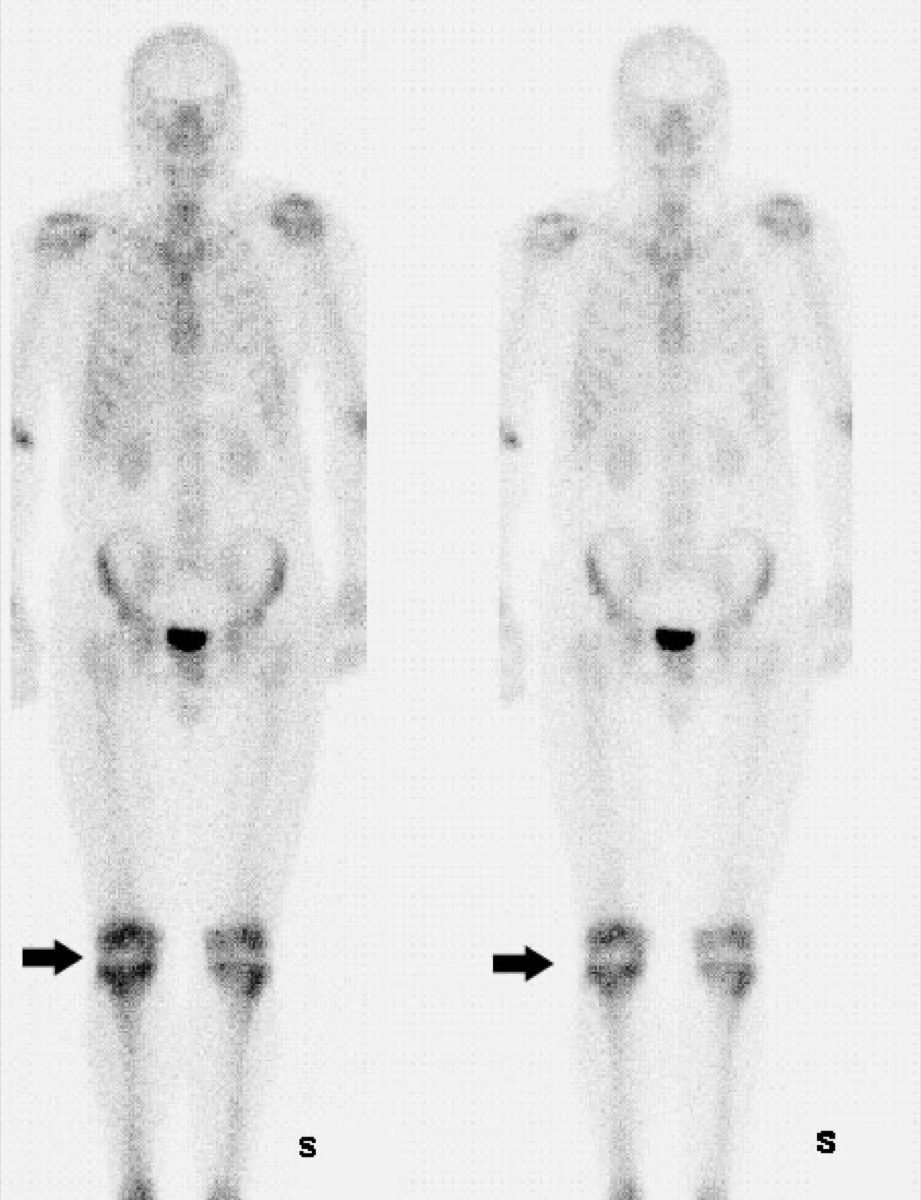 Fibrous Dysplasia on Bone Scan (Shepherd’s Crook)
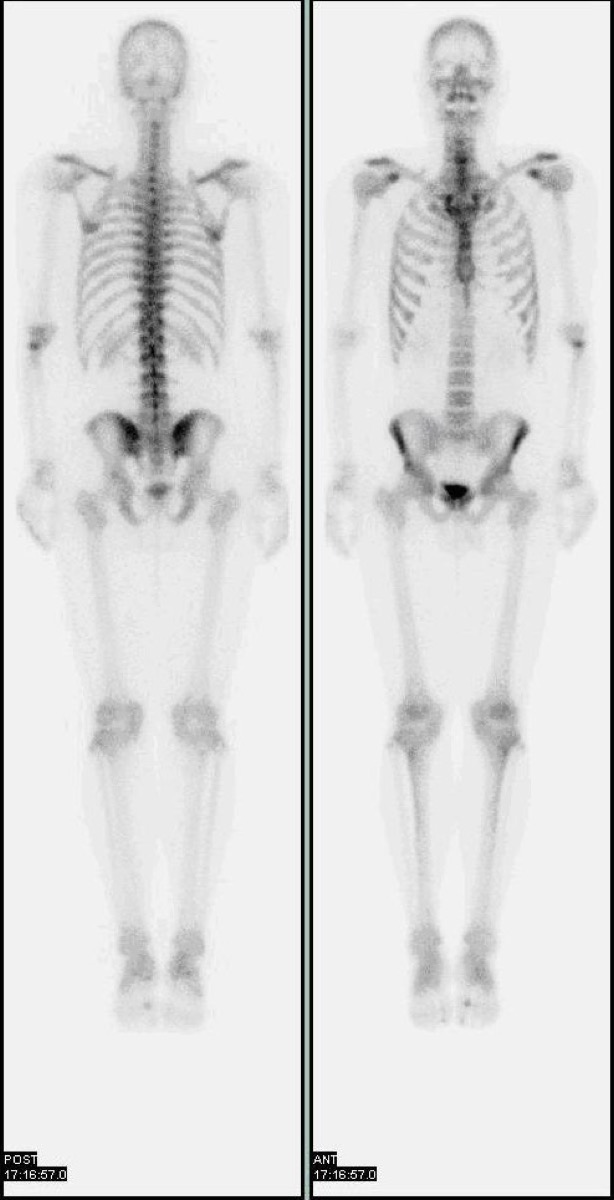 Tc-99m Physical Half-Life
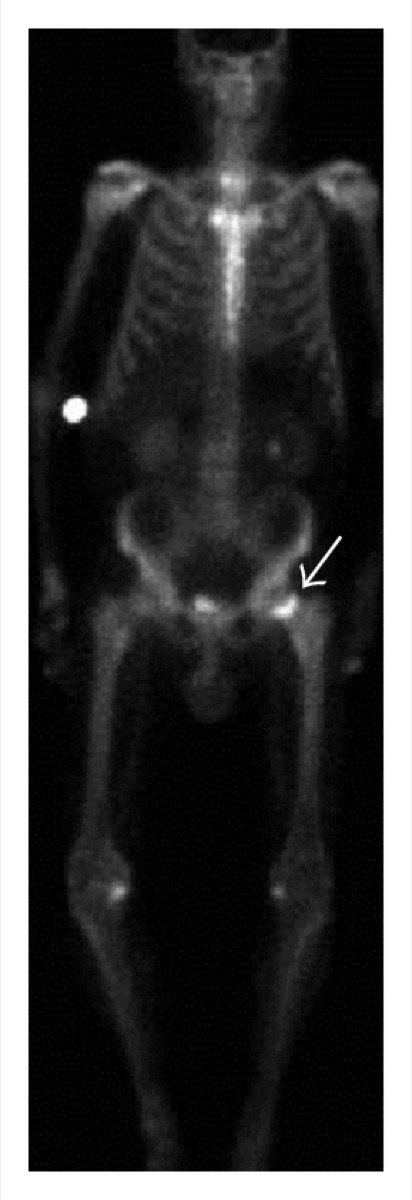 Periprosthetic Uptake After Hip Replacement
Bone Scan Timing: When to Acquire Delayed Images
Normal Whole-Body Bone Scan (Tc-99m MDP)
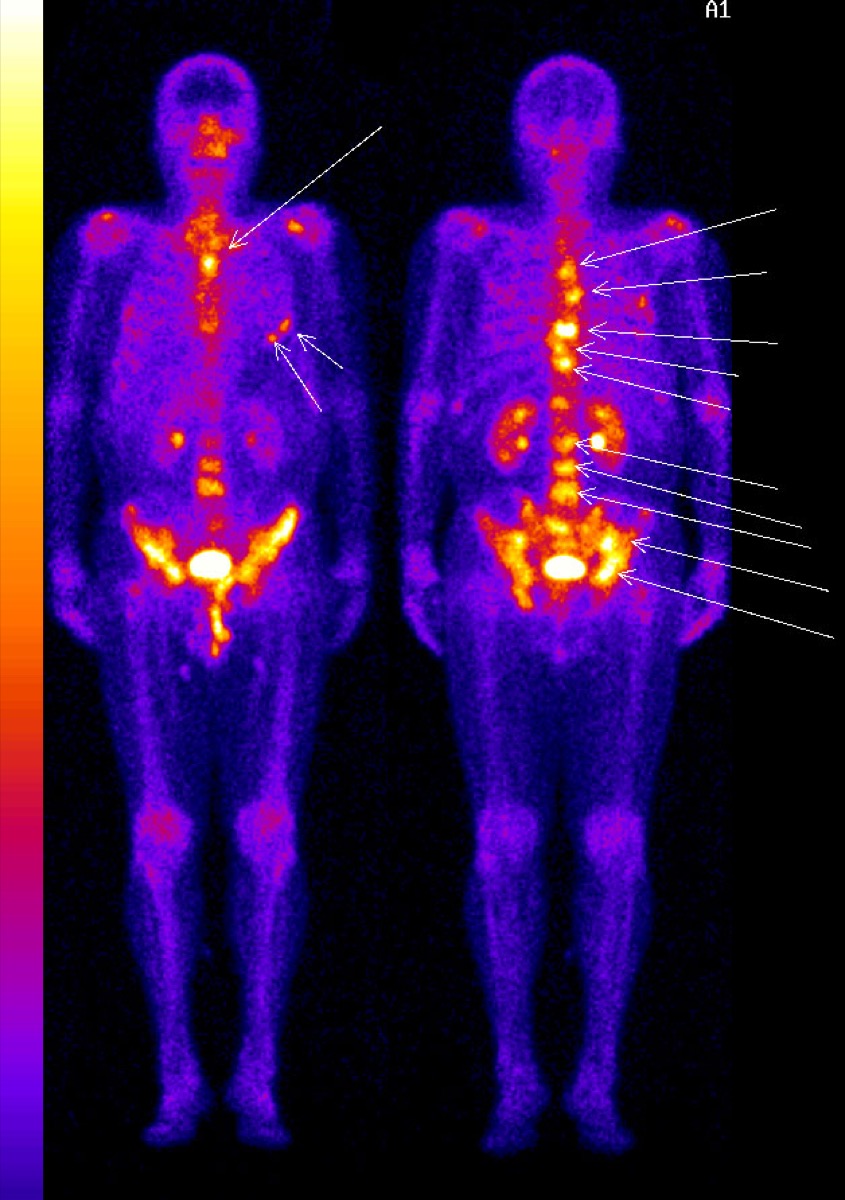 Diffuse Skeletal Metastases on Bone Scan
All 130 nuclear medicine images by category →
Practise image interpretation in the app
All 130 images as an interactive quiz, alongside 500 NMTCB and ARRT(N) questions with worked explanations, case studies and timed mock exams. 25 questions are free, no card and no account.