Normal Lung Perfusion Scan and Pulmonary Embolism
CC BY-SA 4.0 · Wikimedia Commons · source file
Question
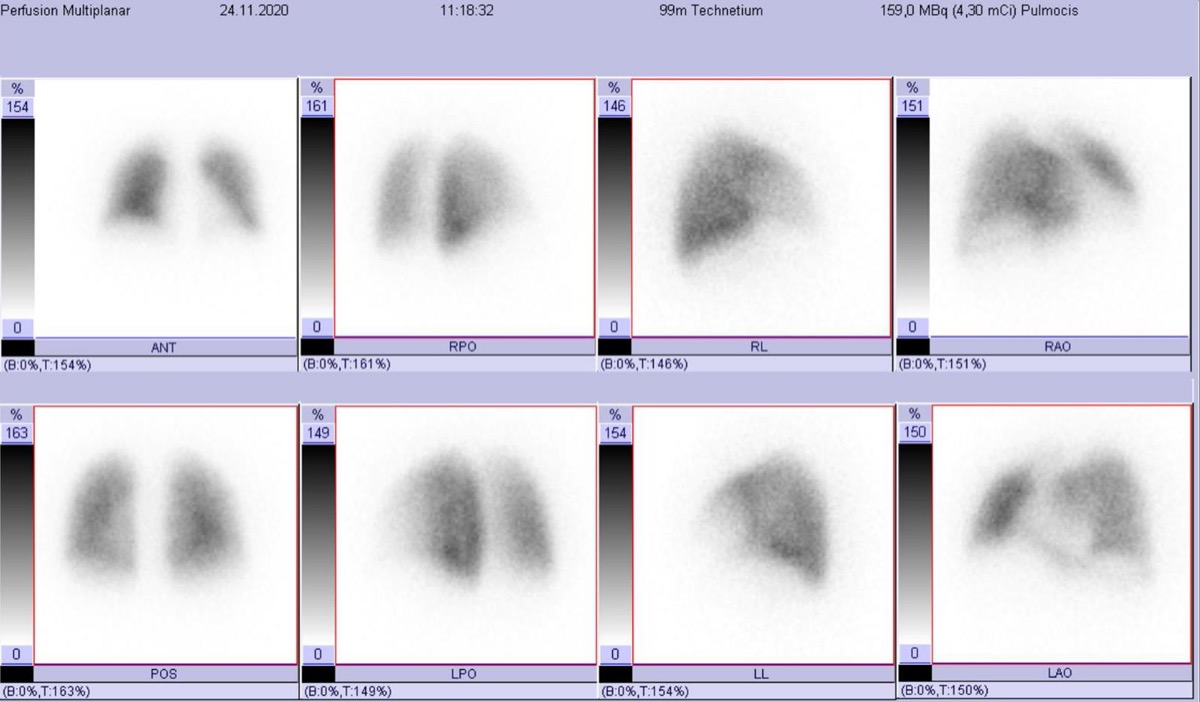
This lung perfusion scintigraphy shows uniform distribution of Tc-99m MAA throughout both lungs in all projections with no perfusion defects. A normal lung perfusion scan is clinically significant because:
- AIt effectively rules out clinically significant pulmonary embolism
- BIt confirms the presence of pulmonary hypertension
- CIt indicates normal lung compliance
- DIt confirms adequate alveolar ventilation
Show the answer and explanation
A. It effectively rules out clinically significant pulmonary embolism
A normal lung perfusion scan has a very high negative predictive value for pulmonary embolism (>99%). Because PE causes perfusion defects, the absence of any perfusion abnormality effectively rules out a clinically significant PE. This is the primary strength of the V/Q scan: a completely normal perfusion scan provides strong evidence against PE. Lung perfusion scans use Tc-99m MAA (macroaggregated albumin), which temporarily embeds in pulmonary capillaries proportional to blood flow.
More lung v/q imaging images
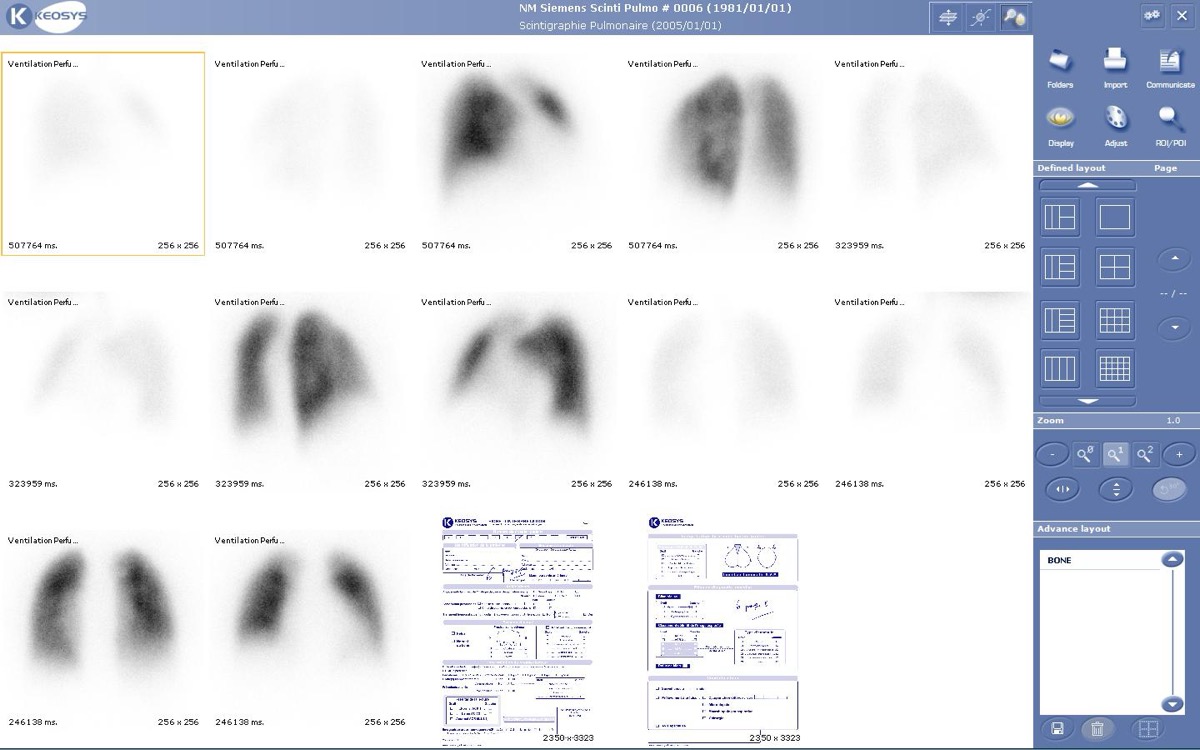 How Tc-99m MAA Lung Perfusion Imaging Works
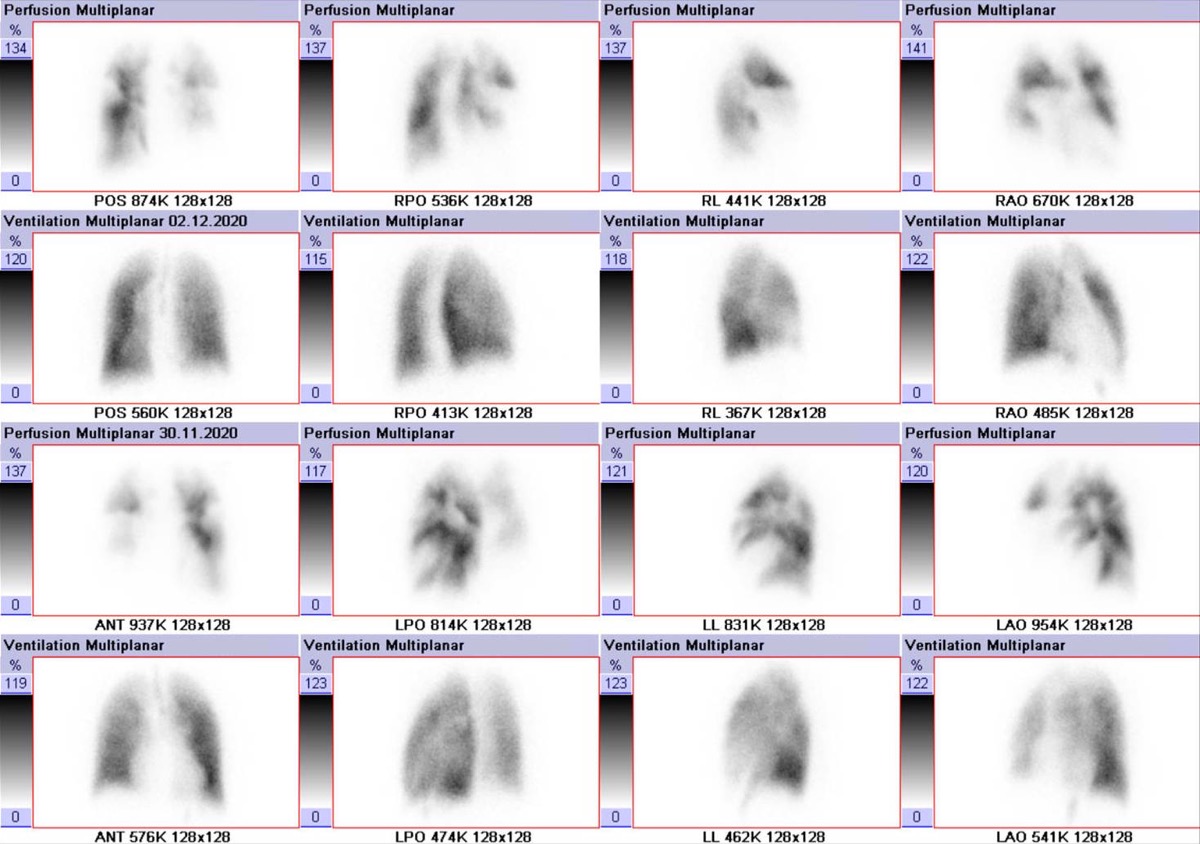 Reducing MAA Particles in Pulmonary Hypertension
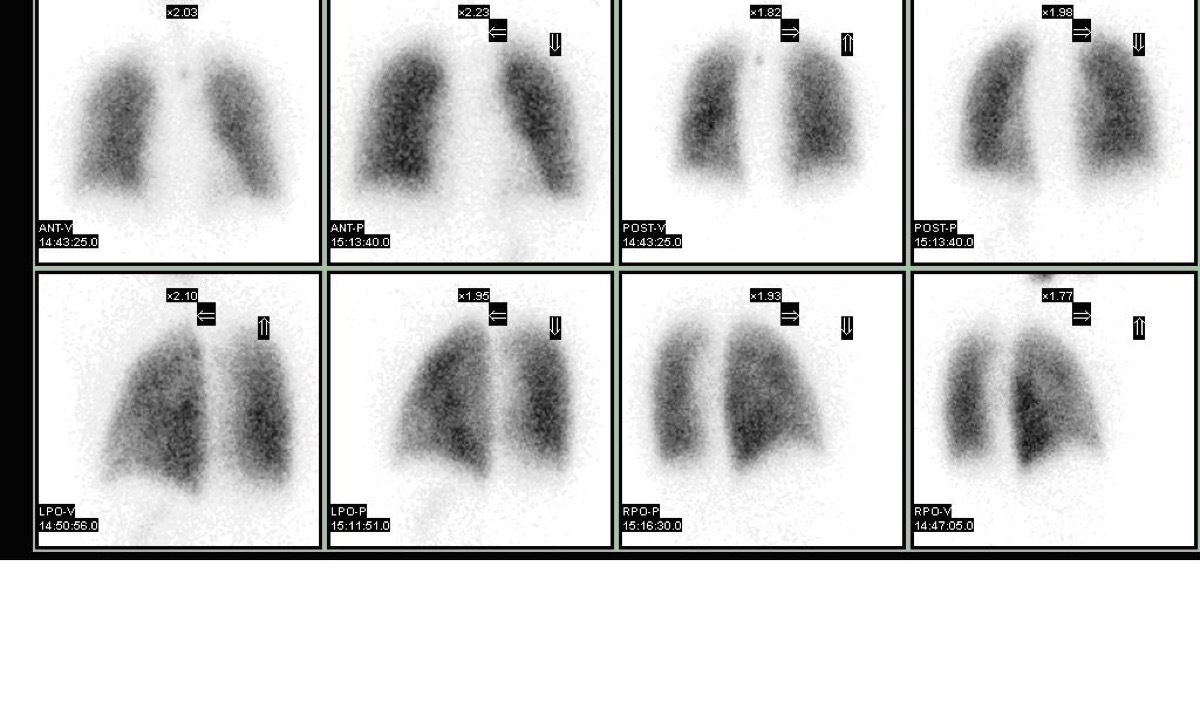 Stripe Sign on a Lung Perfusion Scan
V/Q Scan in COPD: Matched Defects
V/Q Scan vs CTPA for Pulmonary Embolism in Pregnancy
Ventilation Agents: Tc-99m DTPA Aerosol vs Xe-133
All 130 nuclear medicine images by category →
Practise image interpretation in the app
All 130 images as an interactive quiz, alongside 500 NMTCB and ARRT(N) questions with worked explanations, case studies and timed mock exams. 25 questions are free, no card and no account.