How Tc-99m MAA Lung Perfusion Imaging Works
Public domain · Wikimedia Commons · source file
Question
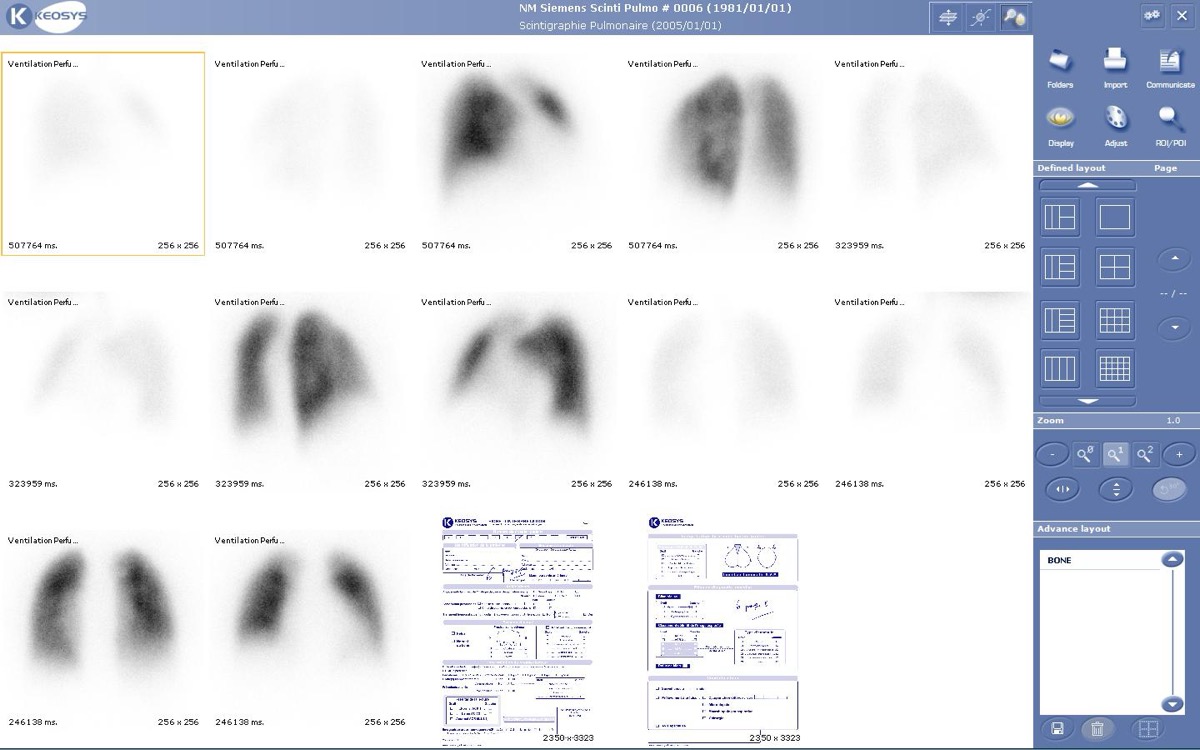
Tc-99m MAA (macroaggregated albumin) is used for lung perfusion scanning. What is the mechanism by which MAA produces a perfusion scan?
- AMAA is absorbed by alveolar epithelium and distributed by lymphatics
- BMAA binds to surfactant in the alveoli
- CMAA temporarily occludes 0.1–0.5% of pulmonary capillaries proportional to blood flow
- DMAA crosses into the alveoli and is exhaled, producing a ventilation image
Show the answer and explanation
C. MAA temporarily occludes 0.1–0.5% of pulmonary capillaries proportional to blood flow
Tc-99m MAA particles (10–100 μm) are injected IV and travel to the pulmonary vasculature, where they temporarily lodge in pulmonary capillaries proportional to regional blood flow. Only 0.1–0.5% of capillaries are occluded, causing no hemodynamic effects in normal patients. Areas of reduced blood flow (PE, pulmonary hypertension) receive less MAA, appearing as photon-deficient ('cold') regions. The particles dissolve within 6–8 hours and are cleared by the reticuloendothelial system.
More lung v/q imaging images
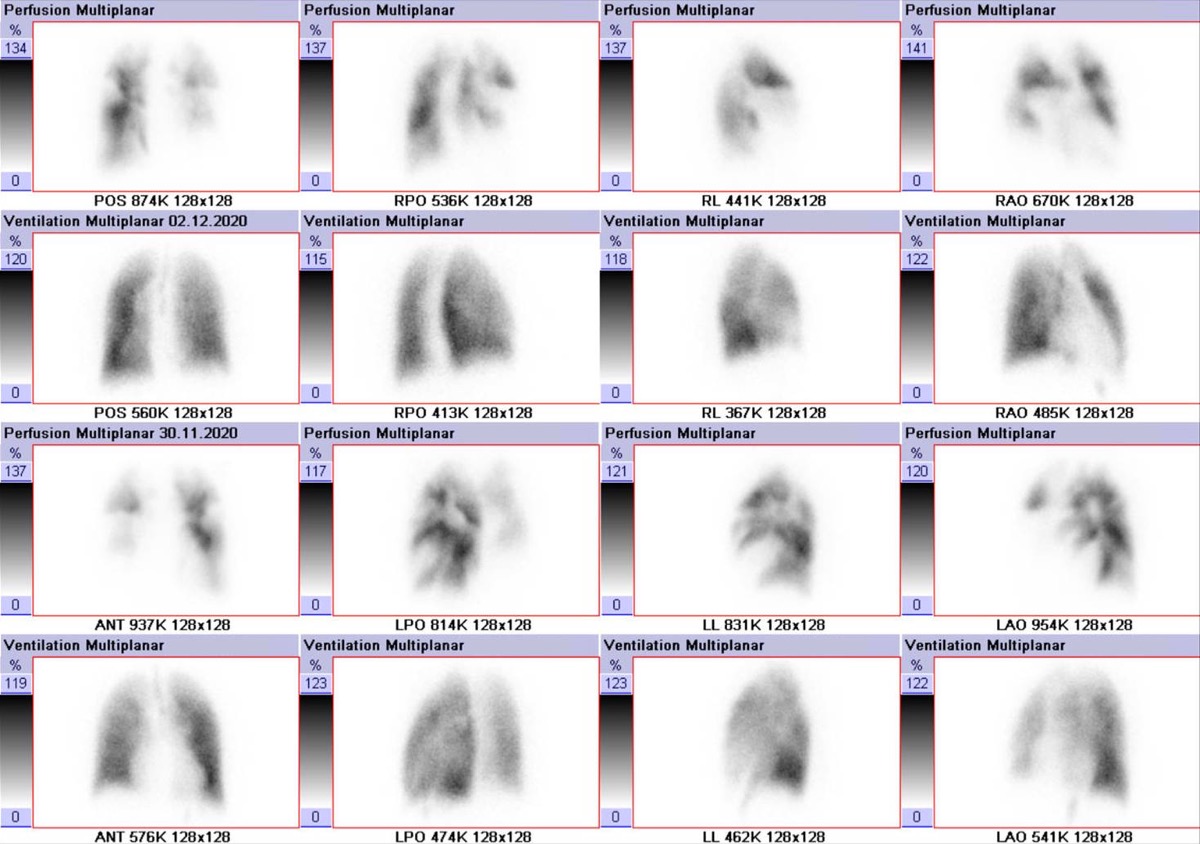 Reducing MAA Particles in Pulmonary Hypertension
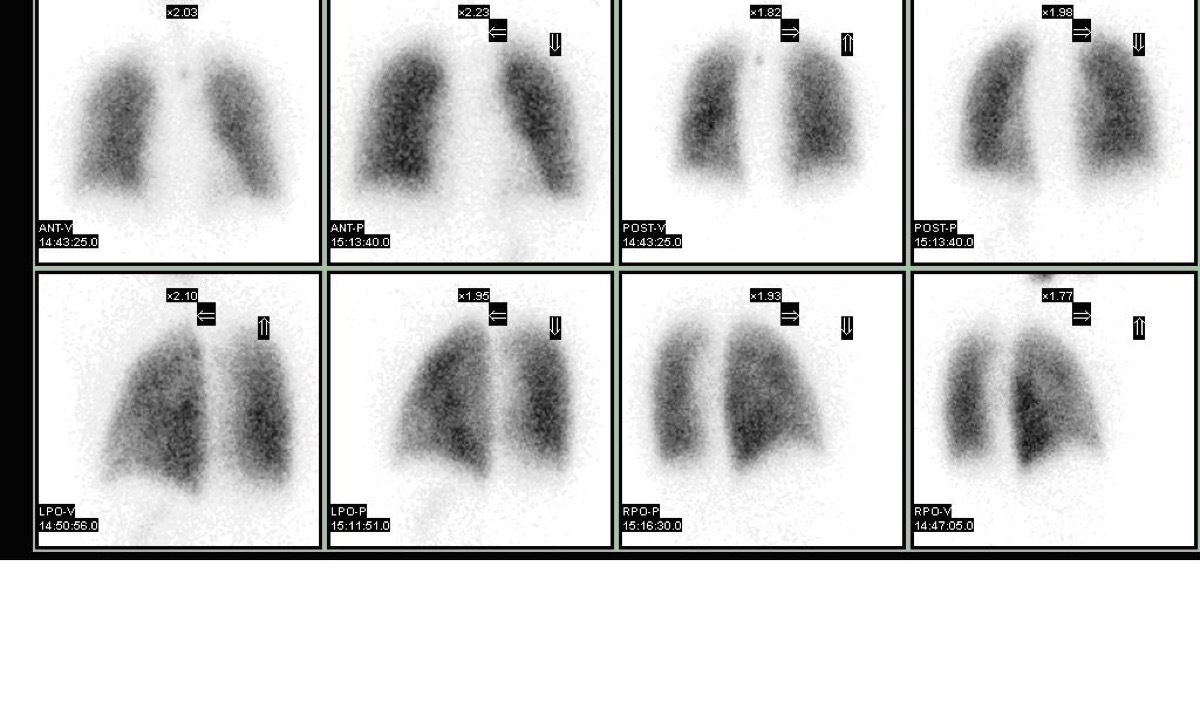 Stripe Sign on a Lung Perfusion Scan
V/Q Scan in COPD: Matched Defects
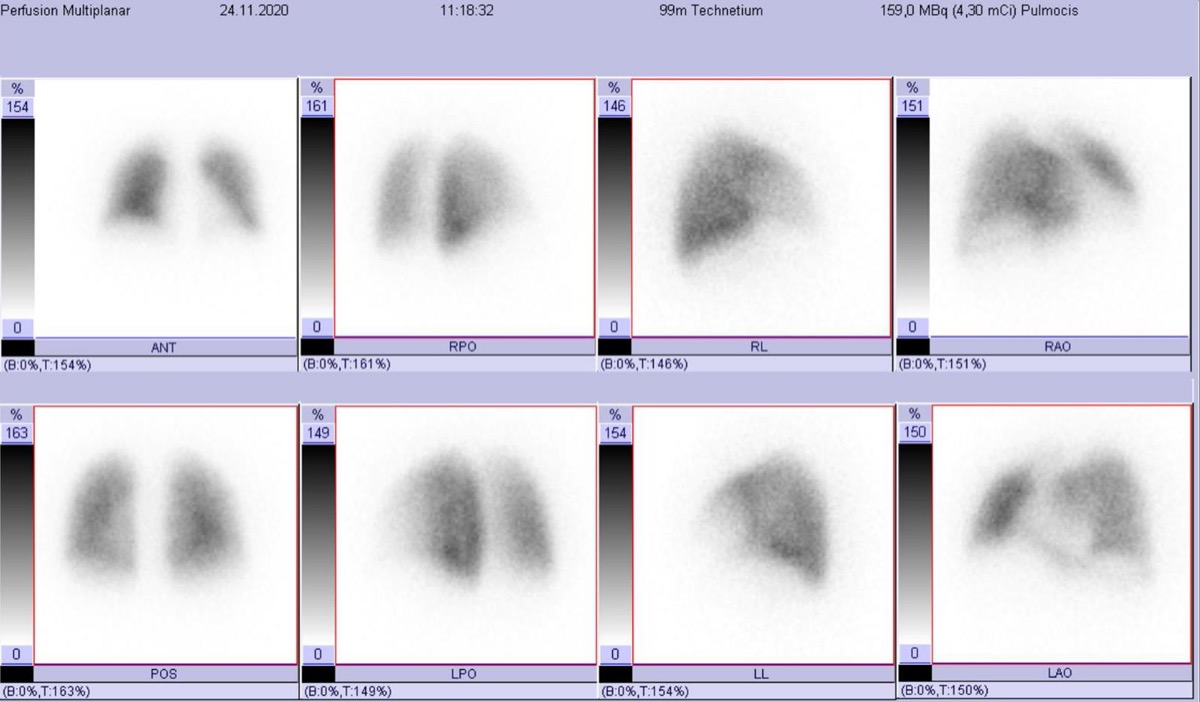 V/Q Scan vs CTPA for Pulmonary Embolism in Pregnancy
Ventilation Agents: Tc-99m DTPA Aerosol vs Xe-133
Intermediate-Probability V/Q Scan
All 130 nuclear medicine images by category →
Practise image interpretation in the app
All 130 images as an interactive quiz, alongside 500 NMTCB and ARRT(N) questions with worked explanations, case studies and timed mock exams. 25 questions are free, no card and no account.