How Tc-99m MDP Localizes in Bone

Public domain · Wikimedia Commons · source file
Question
A whole-body bone scan is performed with Tc-99m MDP. Which of the following correctly describes the PRIMARY mechanism by which MDP localizes in bone?
- AActive transport by osteoblasts
- BChemisorption onto hydroxyapatite crystals in areas of active bone turnover
- CBinding to osteocalcin in mature cortical bone
- DPhagocytosis by osteoclasts
Show the answer and explanation
B. Chemisorption onto hydroxyapatite crystals in areas of active bone turnover
Tc-99m MDP (methylene diphosphonate) localizes in bone through chemisorption onto hydroxyapatite crystals. Areas of increased osteoblastic activity (higher bone turnover) have more exposed hydroxyapatite surface and thus show greater MDP uptake. This is why metastases, fractures, and Paget's disease (all with high bone turnover) show as 'hot spots.' Blood flow also plays a role — increased vascularity delivers more tracer to a site.
More bone imaging images
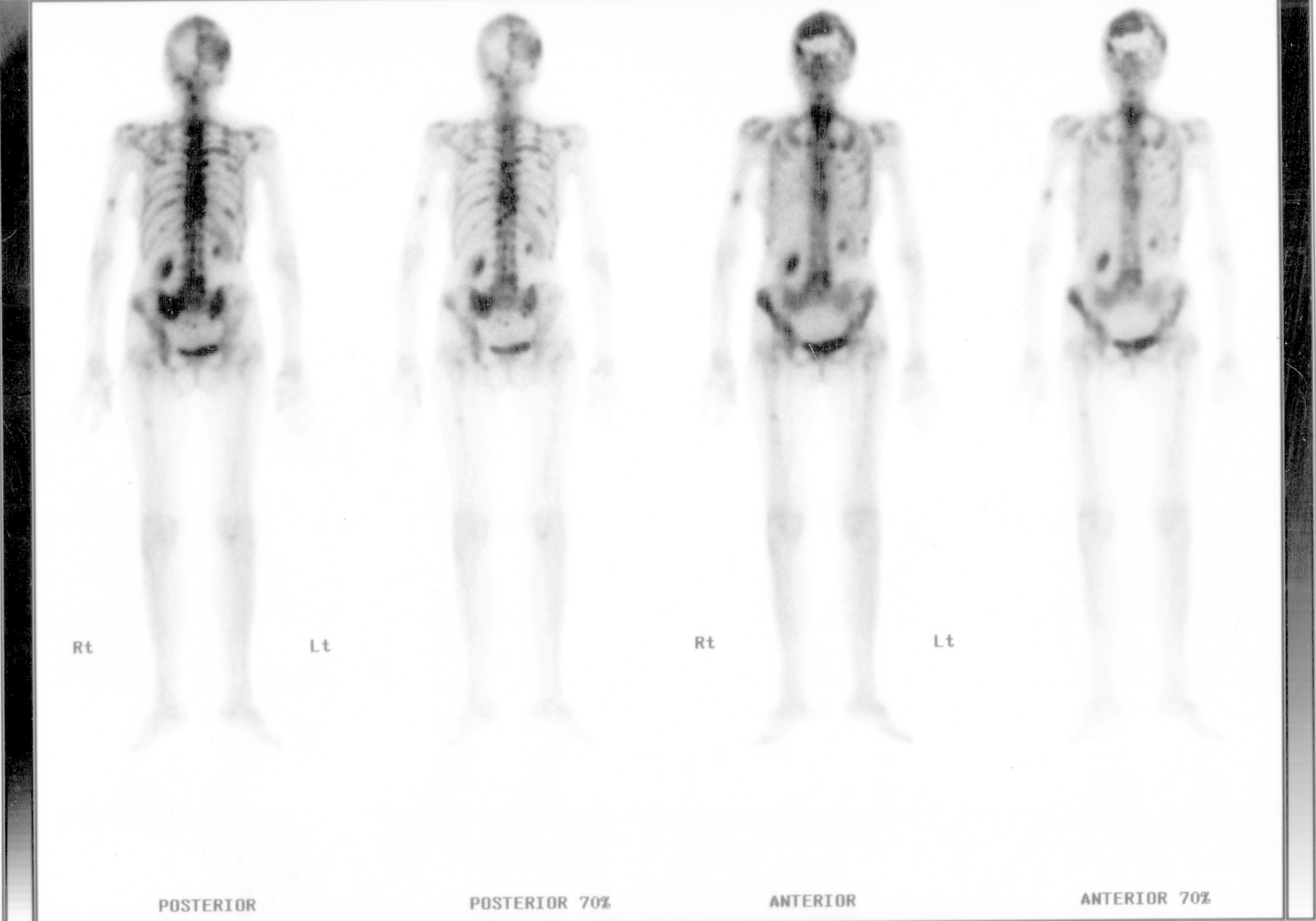 Bone Metastases: Prostate and Breast Primaries
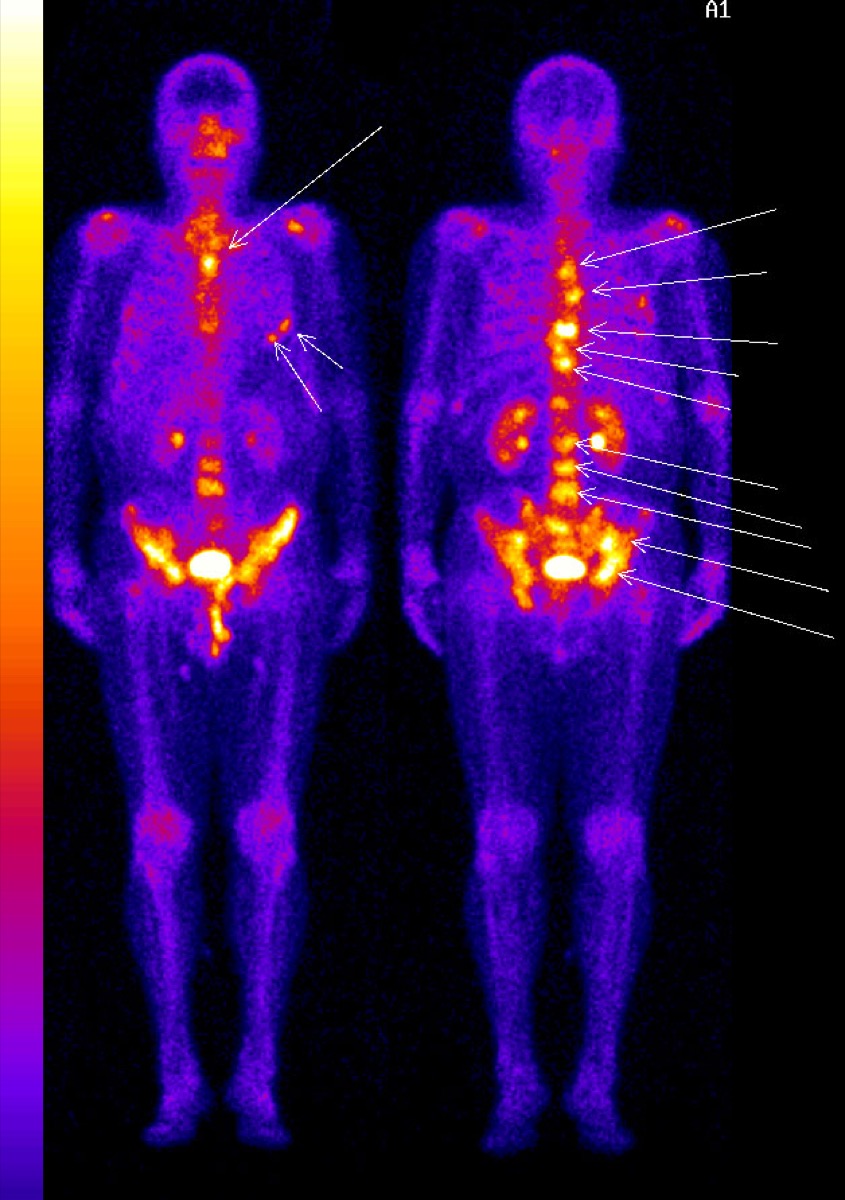 Superscan on Bone Scintigraphy
Paget’s Disease of Bone on Bone Scan
Photopenic Bone Lesions: Multiple Myeloma
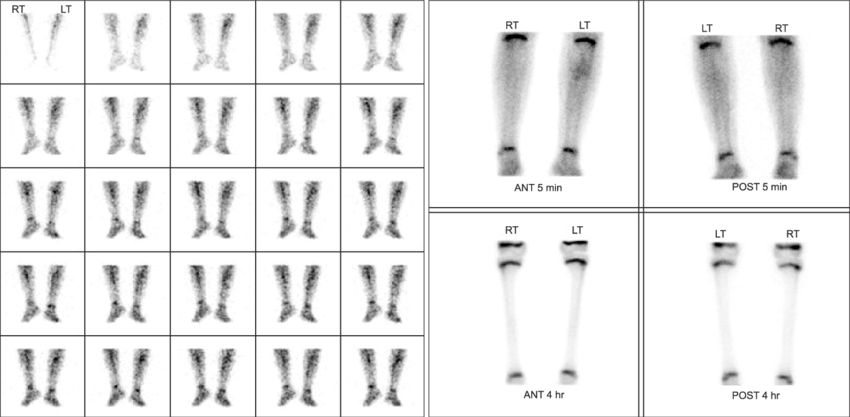 Cellulitis vs Osteomyelitis on Three-Phase Bone Scan
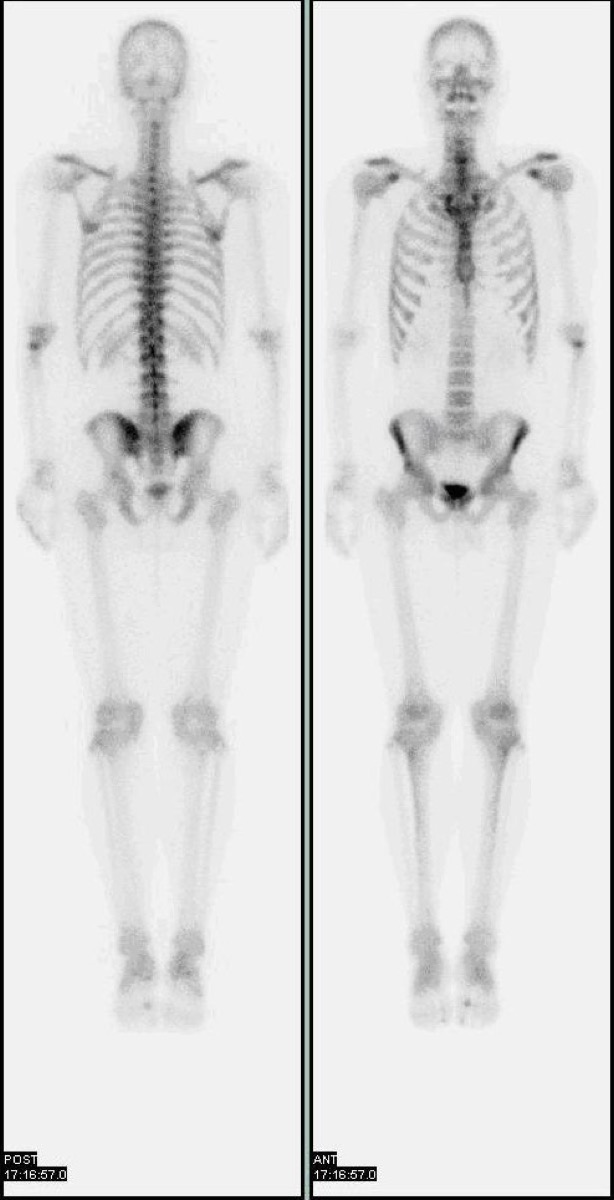 Normal Physiologic Uptake on a Bone Scan
All 130 nuclear medicine images by category →
Practise image interpretation in the app
All 130 images as an interactive quiz, alongside 500 NMTCB and ARRT(N) questions with worked explanations, case studies and timed mock exams. 25 questions are free, no card and no account.