Vasodilator Stress Contraindications: Caffeine and Bronchospasm
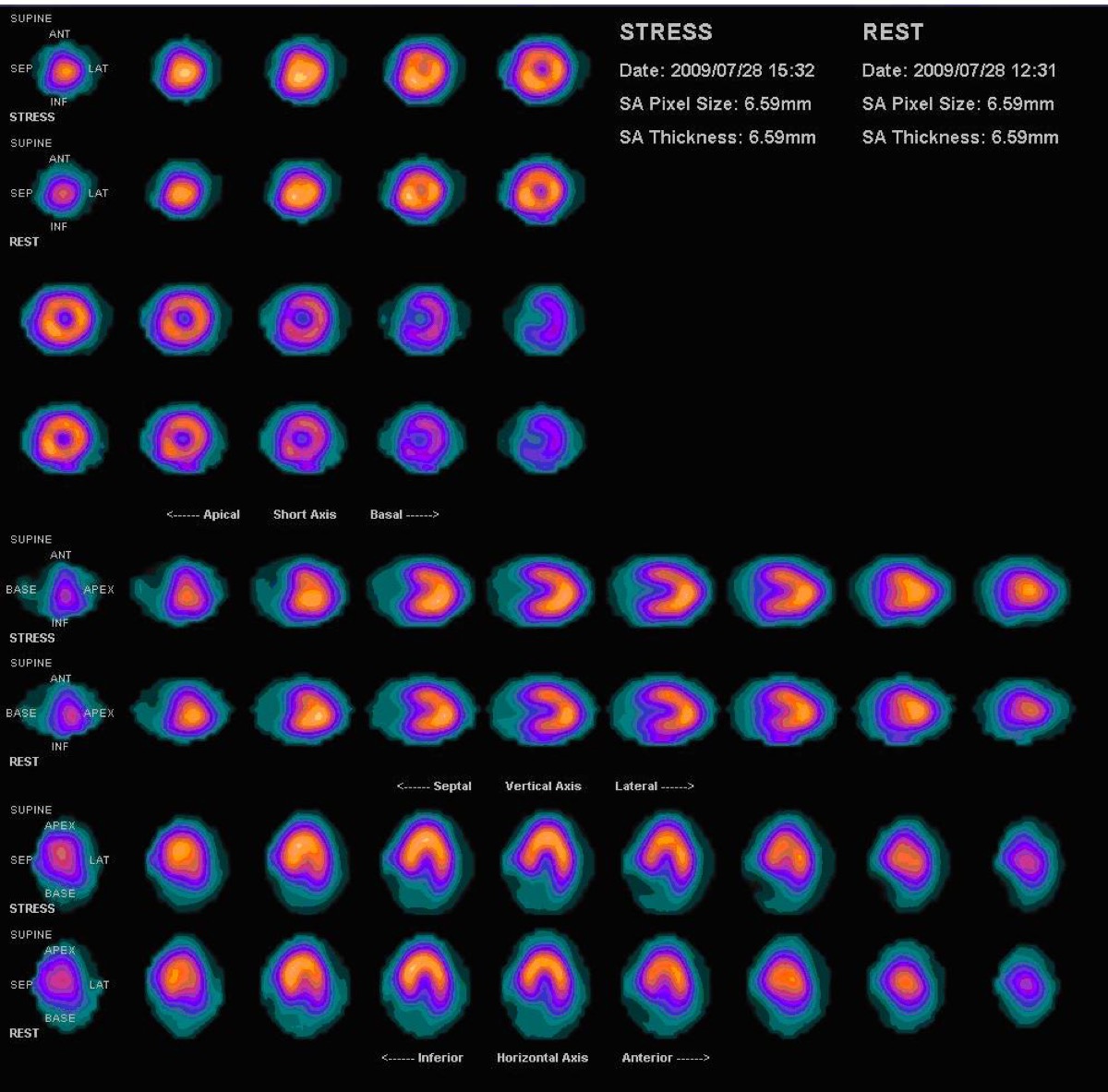
CC BY 3.0 · Myohan / Wikimedia Commons · source file
Question
Pharmacologic stress agents (adenosine, dipyridamole, regadenoson) are commonly used for myocardial perfusion imaging when patients cannot exercise. Which of the following represents an ABSOLUTE contraindication to adenosine or dipyridamole pharmacologic stress?
- AAdenosine receptor blockade by caffeine — active bronchospasm (asthma/COPD exacerbation) or high-degree AV block
- BElevated creatinine
- CAnticoagulation with warfarin
- DHistory of coronary artery bypass graft surgery
Show the answer and explanation
A. Adenosine receptor blockade by caffeine — active bronchospasm (asthma/COPD exacerbation) or high-degree AV block
Adenosine and dipyridamole (which increases endogenous adenosine) cause coronary hyperemia by acting on A2A adenosine receptors. ABSOLUTE contraindications include: (1) active bronchospasm/severe reactive airway disease — adenosine can cause bronchoconstriction via A2B receptors; (2) second or third degree AV block without a pacemaker — adenosine slows AV conduction; (3) caffeine ingestion within 12 hours — caffeine is an adenosine receptor antagonist and blocks the vasodilatory effect, invalidating the study; (4) hypotension (SBP <90 mmHg). Dobutamine stress is used when vasodilators are contraindicated.
More cardiac imaging images
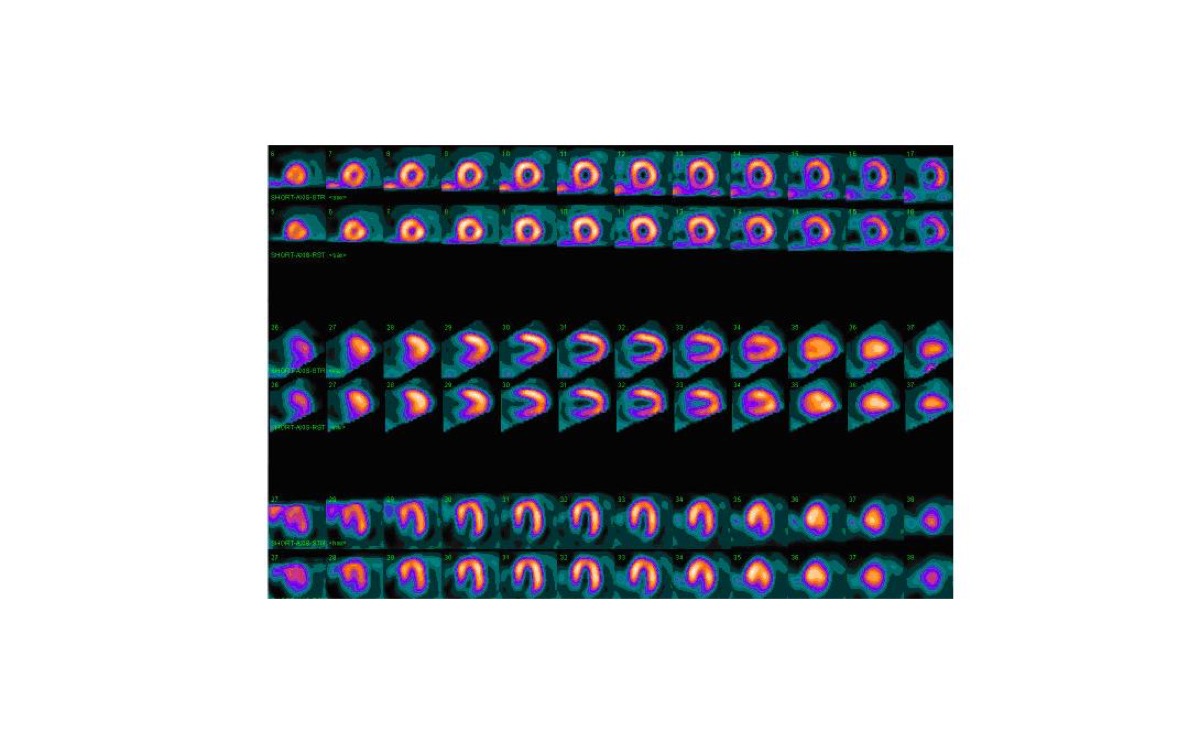 Gated SPECT: Ejection Fraction and Ventricular Volumes
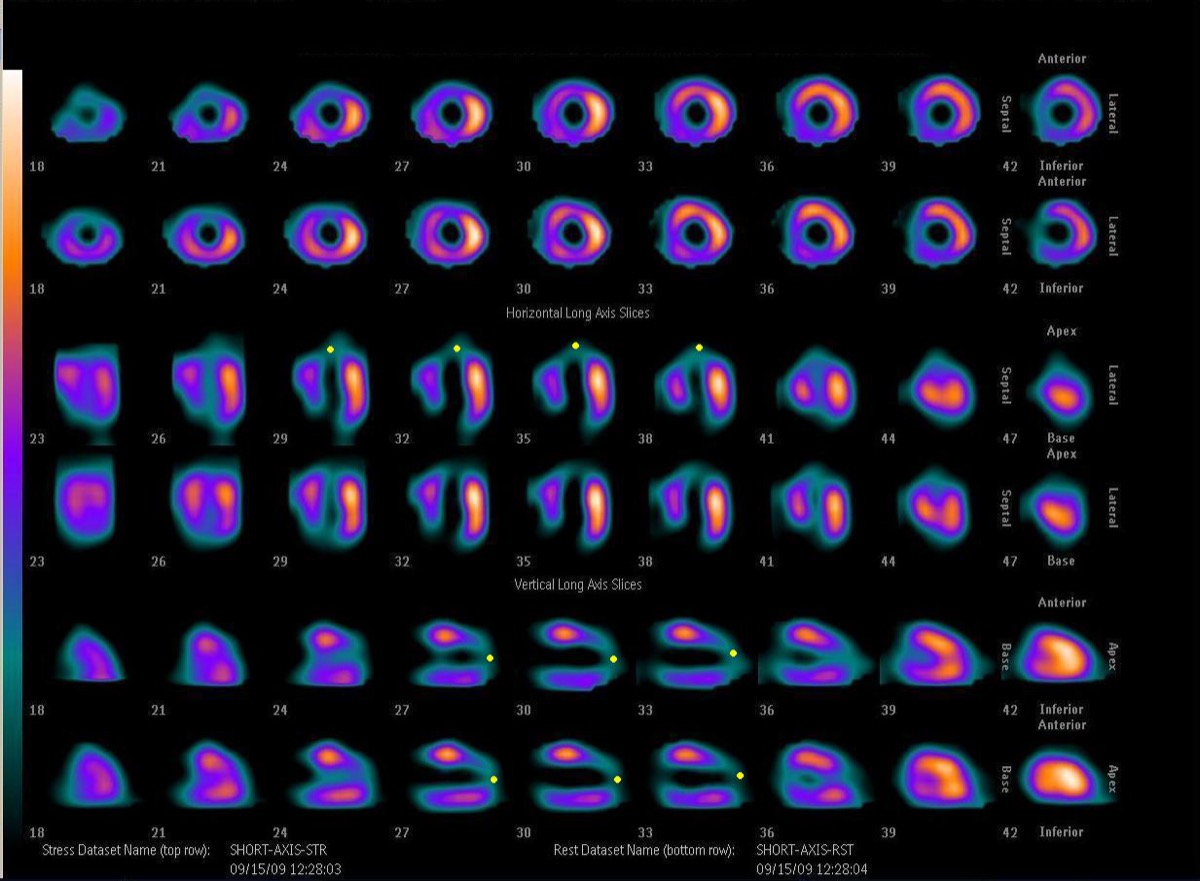 LAD Territory Perfusion Defect on SPECT
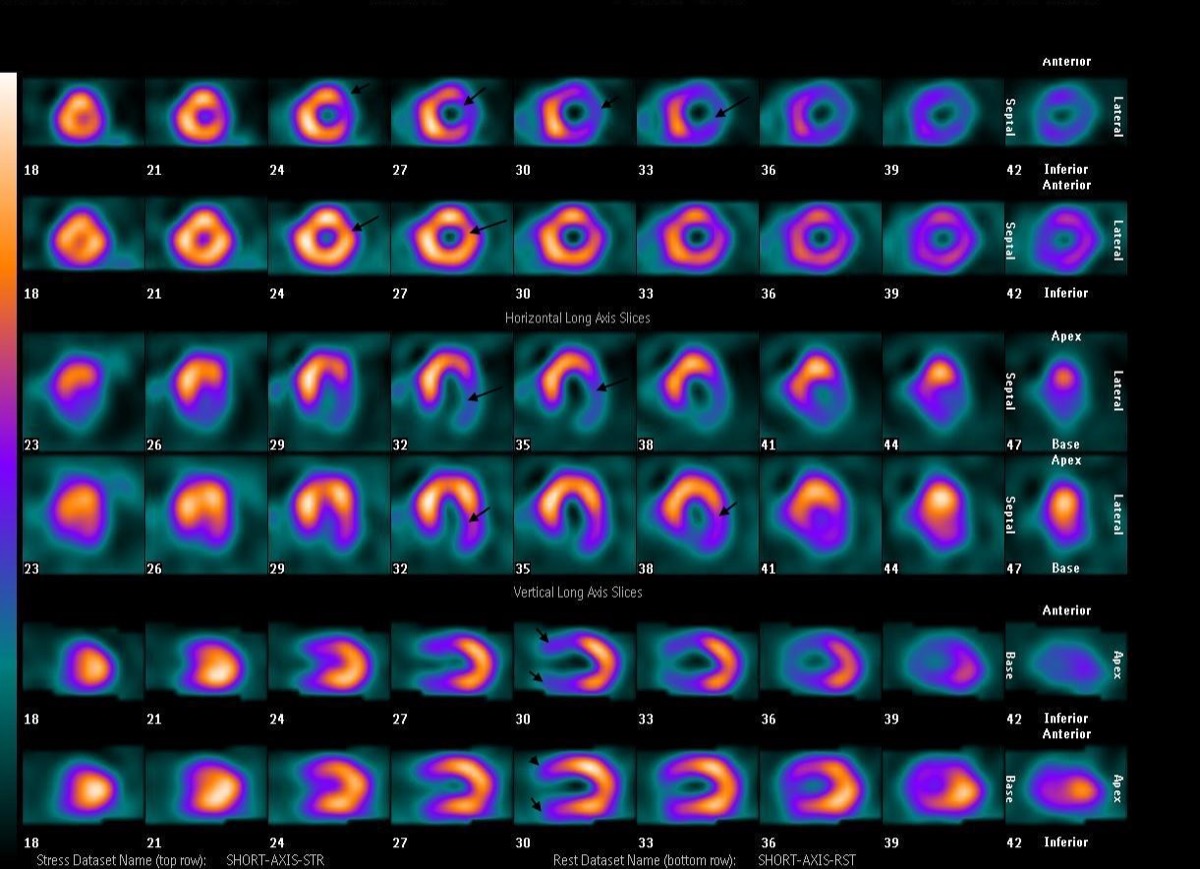 Multivessel Coronary Disease on Stress MPI
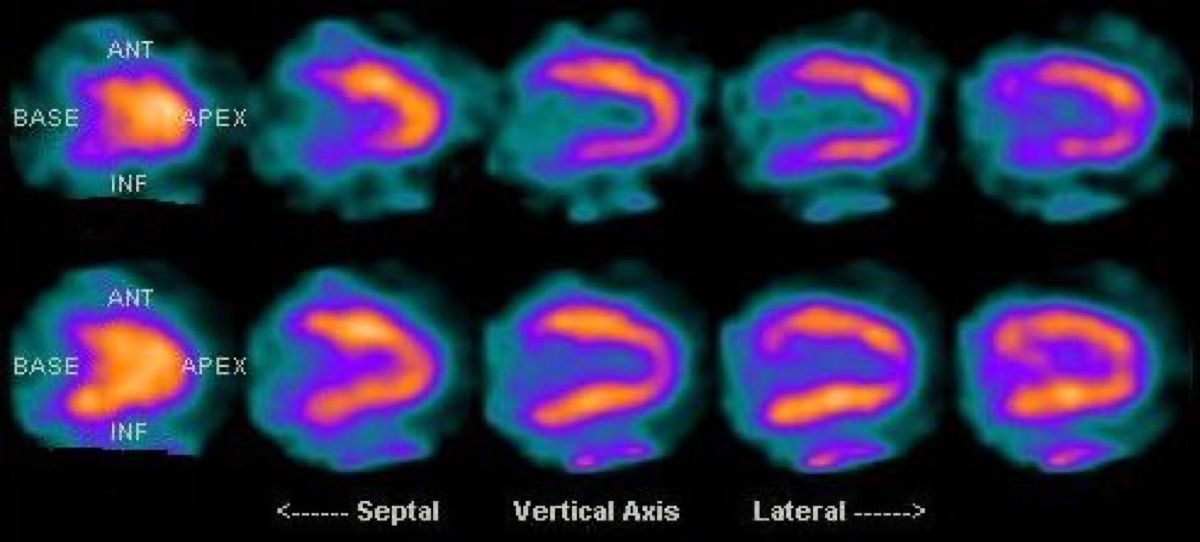 Prone Imaging in Cardiac SPECT
Prominent Right Ventricle on MPI: RV Hypertrophy
Dobutamine Stress for Myocardial Perfusion Imaging
All 130 nuclear medicine images by category →
Practise image interpretation in the app
All 130 images as an interactive quiz, alongside 500 NMTCB and ARRT(N) questions with worked explanations, case studies and timed mock exams. 25 questions are free, no card and no account.