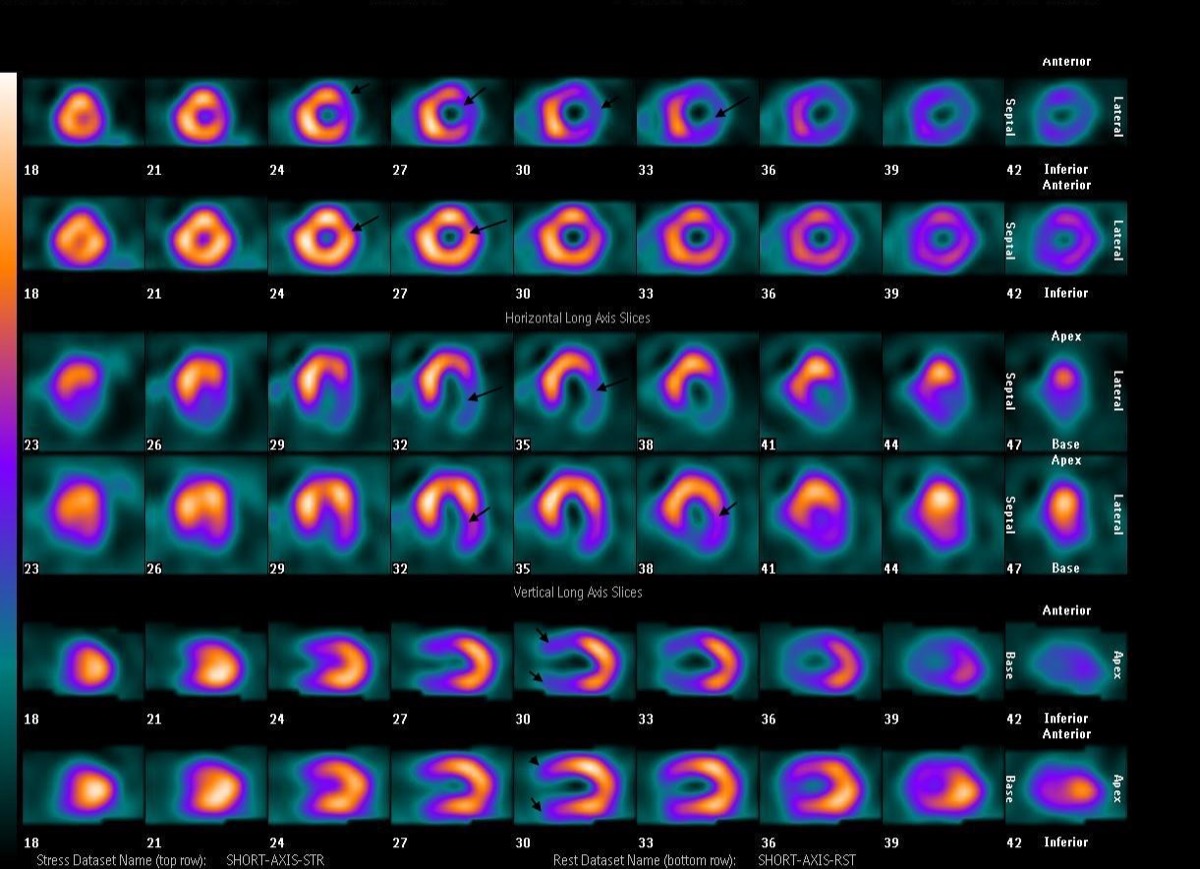
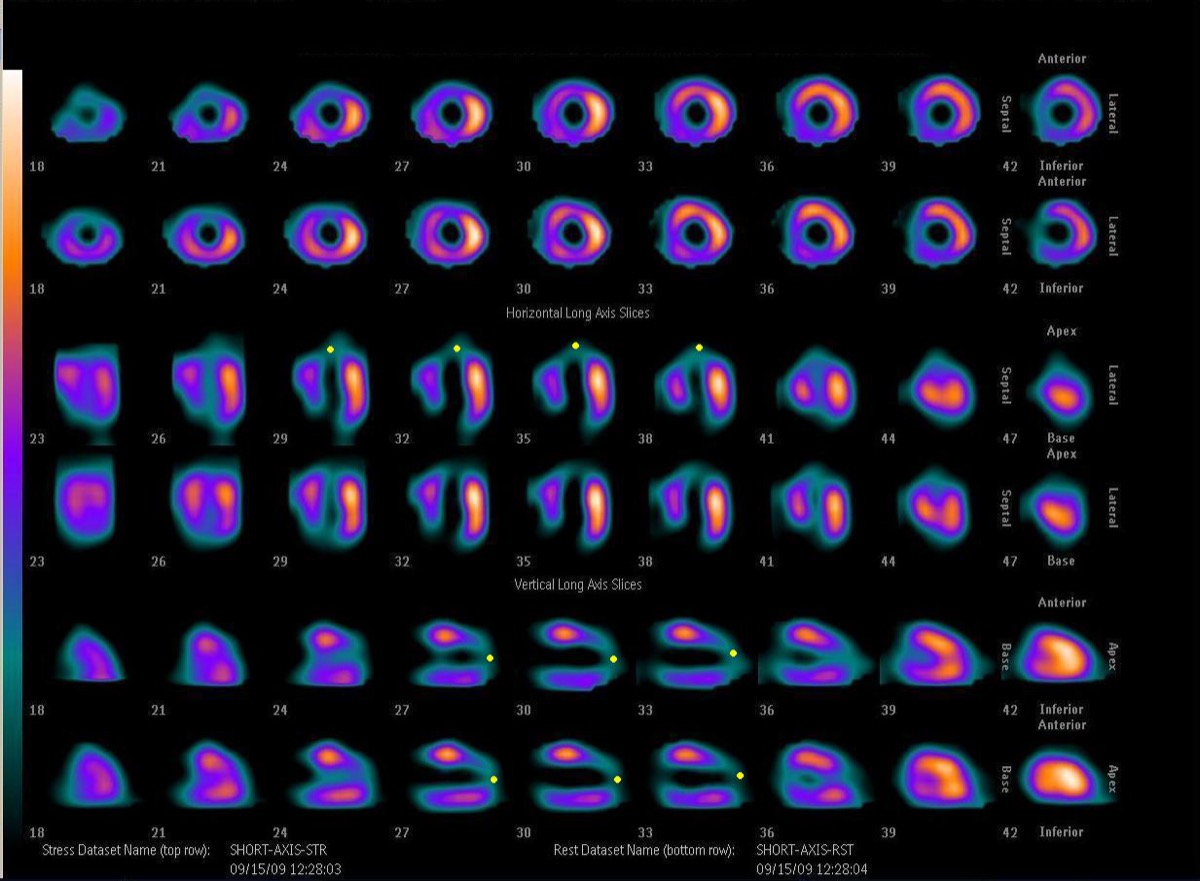
Transient Ischemic Dilation (TID) on Gated SPECT
CC BY-SA 4.0 · Wikimedia Commons · source file
Question
A reversible (stress-induced) lateral wall perfusion defect is identified on gated SPECT. The LVEF is 55% at rest and drops to 42% during pharmacologic stress. This stress-induced reduction in LVEF (>5% drop) is called:
- ANormal stress response
- BHypertensive response to pharmacologic stress
- CTechnical artifact from gating error
- DTransient ischemic dilation (TID) or stress-induced LVEF drop — marker of severe CAD
Show the answer and explanation
D. Transient ischemic dilation (TID) or stress-induced LVEF drop — marker of severe CAD
A drop in LVEF of ≥5% from rest to stress on gated SPECT (or transient ischemic dilation of the LV cavity at stress) is a marker of hemodynamically significant, often multivessel or left main coronary artery disease. It indicates that the ischemic burden is large enough to impair global LV function during stress. This finding upgrades risk even when the perfusion defect appears limited to one territory. Combined with a reversible lateral wall defect, it suggests significant LCX territory ischemia with impact on global function.
More cardiac imaging images
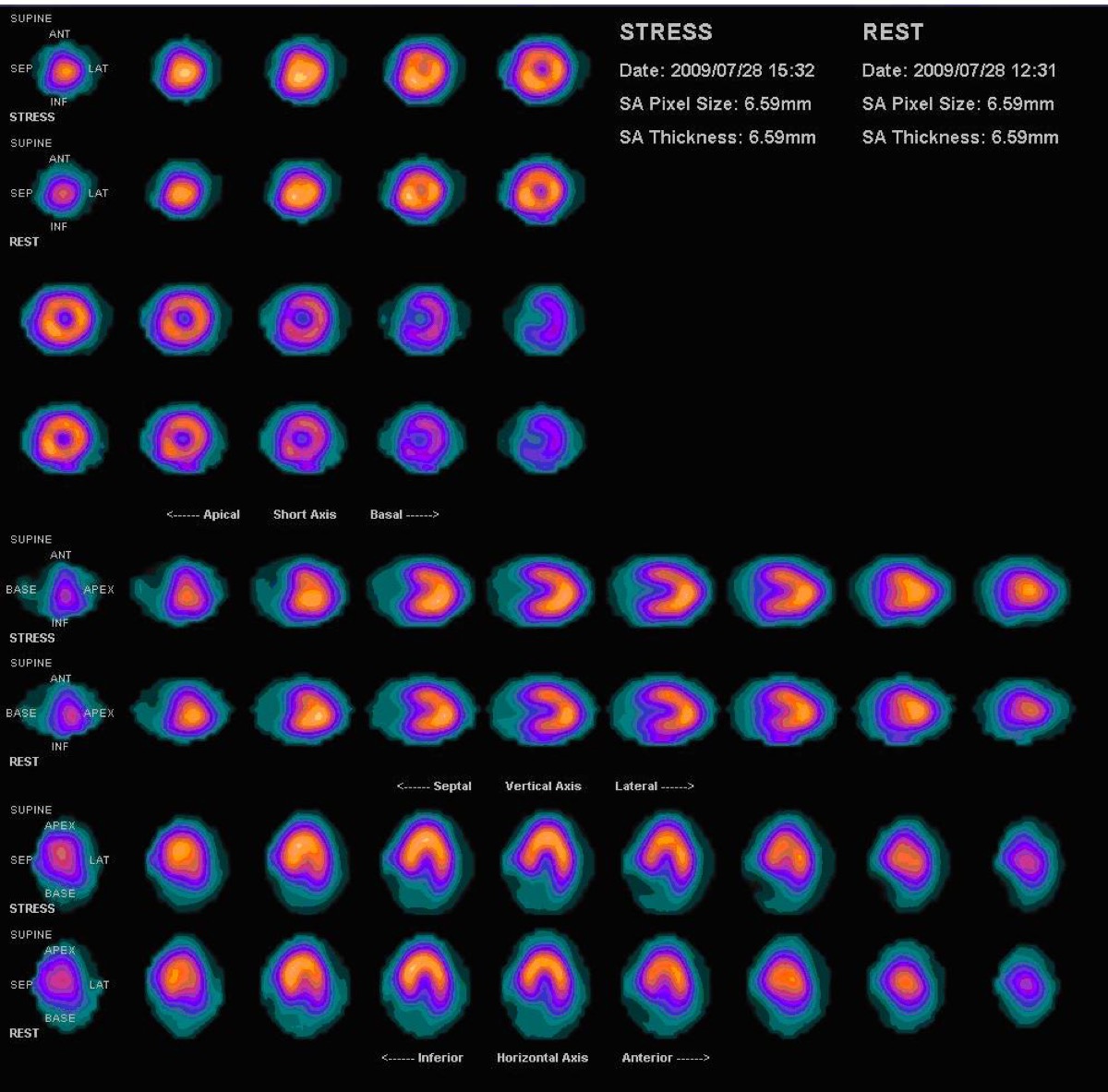 Rb-82 PET Perfusion and the Sr-82/Rb-82 Generator
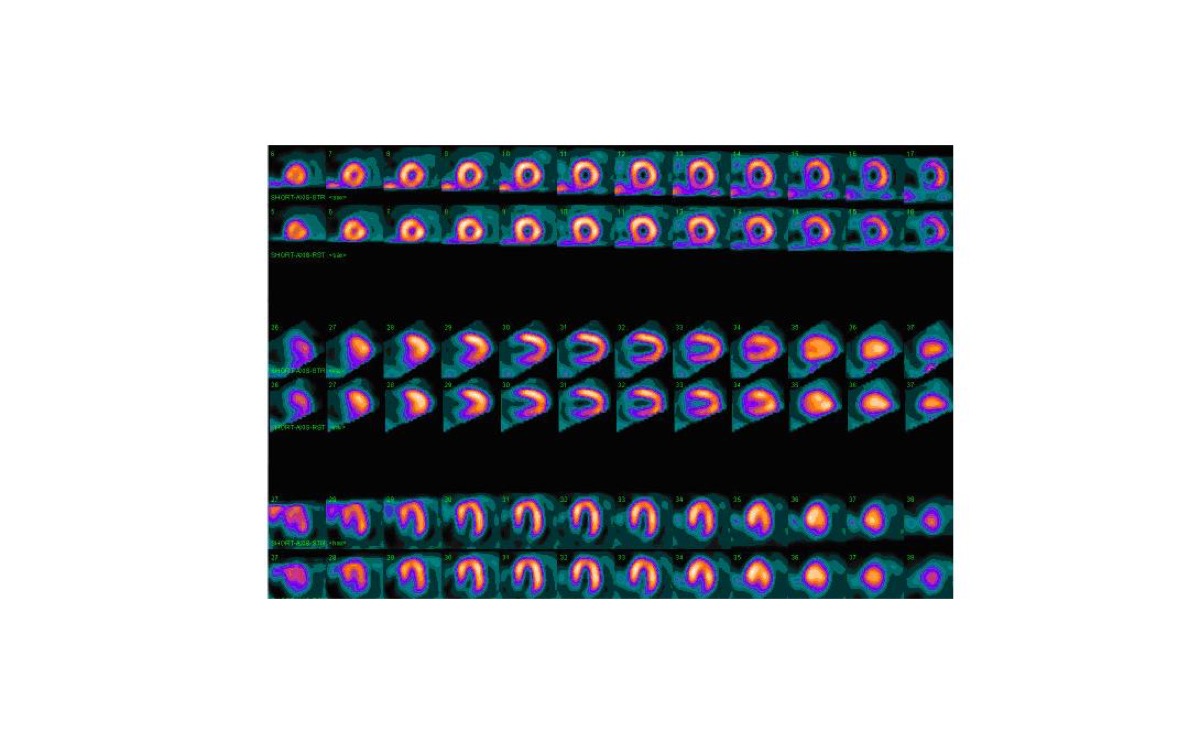 Breast Attenuation Artifact on Myocardial Perfusion SPECT
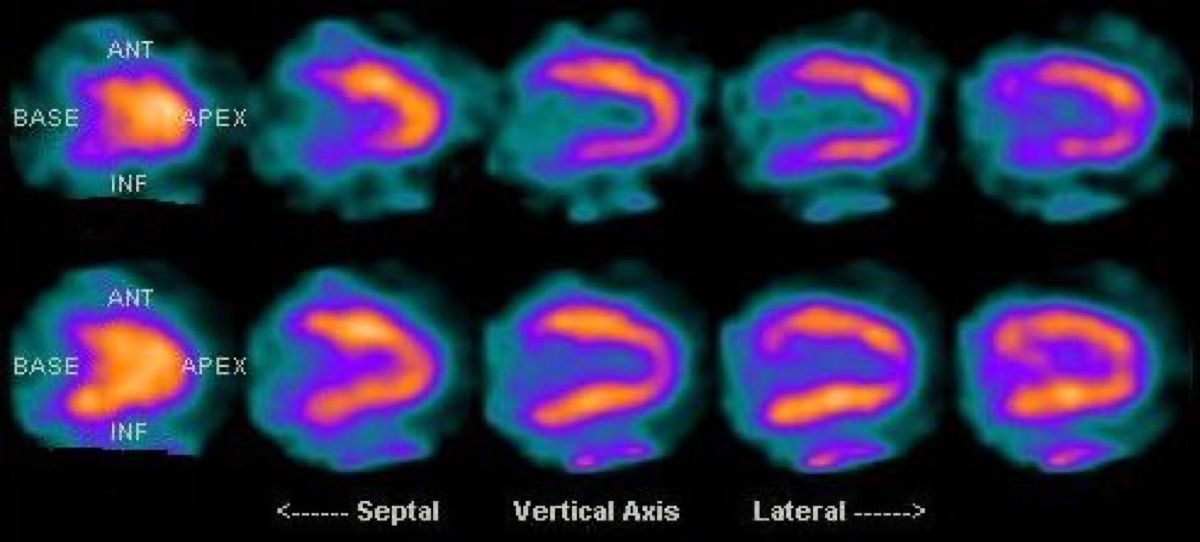 CT Attenuation Correction Misregistration in Cardiac SPECT
 FDG PET Viability: Hibernating Myocardium
Inferior Wall Ischemia: Right Coronary Artery Territory
Vasodilator Stress Contraindications: Caffeine and Bronchospasm
All 130 nuclear medicine images by category →
Practise image interpretation in the app
All 130 images as an interactive quiz, alongside 500 NMTCB and ARRT(N) questions with worked explanations, case studies and timed mock exams. 25 questions are free, no card and no account.