OctreoScan (In-111 Octreotide): How It Localizes
CC BY-SA 3.0 · Wikimedia Commons · source file
Question
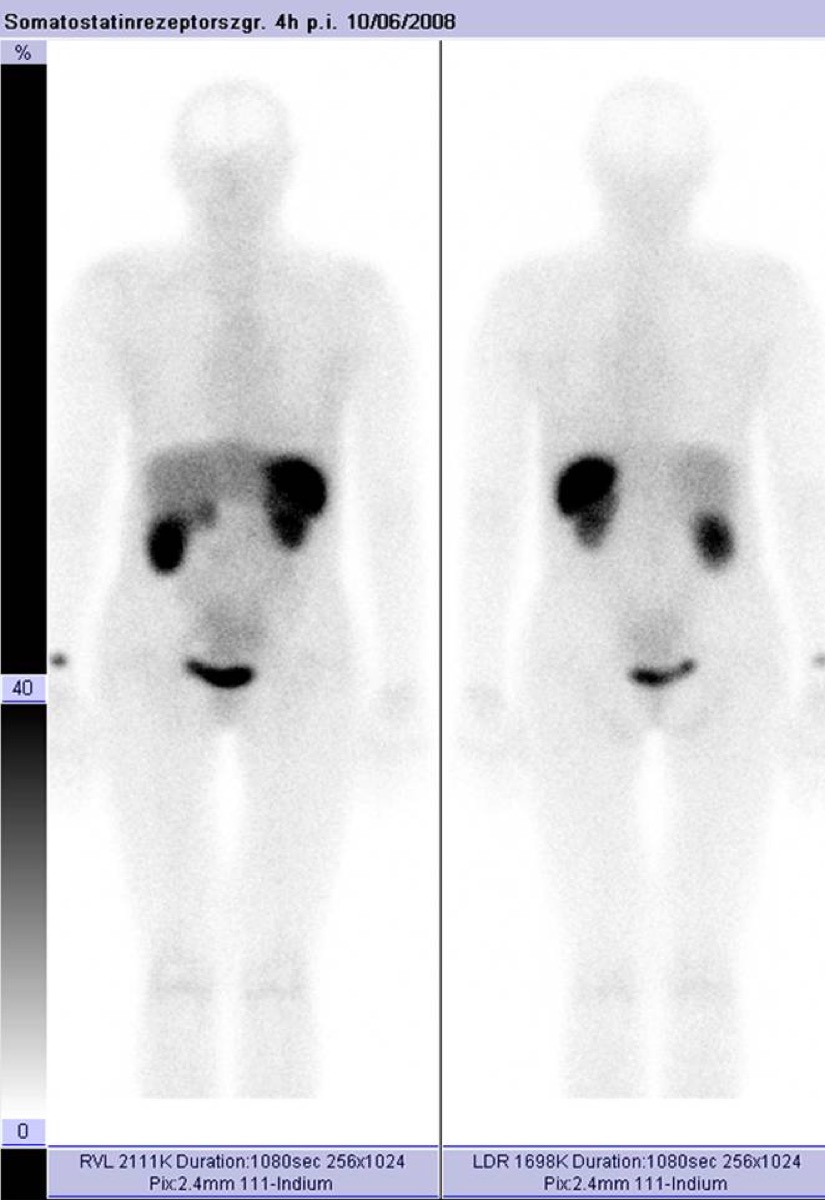
This In-111 octreotide (OctreoScan) image shows focal abnormal uptake suspicious for a neuroendocrine tumor. What is the PRIMARY mechanism by which OctreoScan detects neuroendocrine tumors?
- APreferential glucose metabolism in neuroendocrine tumor cells
- BAccumulation in areas of increased vascularity
- CMitochondrial uptake proportional to cell membrane potential
- DBinding of radiolabeled octreotide to somatostatin receptors (SSTR2) overexpressed on NETs
Show the answer and explanation
D. Binding of radiolabeled octreotide to somatostatin receptors (SSTR2) overexpressed on NETs
In-111 octreotide (OctreoScan) is a radiolabeled somatostatin analogue that binds to somatostatin receptors, particularly SSTR2, which are overexpressed on most neuroendocrine tumors (NETs) — including carcinoid tumors, gastrinomas, insulinomas, glucagonomas, and pheochromocytomas. Normal physiologic uptake is seen in the liver, spleen, kidneys, and bowel. OctreoScan has largely been replaced by Ga-68 DOTATATE PET/CT, which has superior sensitivity and resolution.
More pet and oncology images
 I-123 MIBG Uptake Mechanism in Pheochromocytoma
 Ga-68 PSMA PET/CT in Prostate Cancer
Ga-68 DOTATATE PET vs OctreoScan for Neuroendocrine Tumors
 Deauville Score 1–2: Complete Metabolic Response
FDG-Avid Benign Disease: Infection and Inflammation Mimics
How SUV Is Calculated on FDG PET
All 130 nuclear medicine images by category →
Practise image interpretation in the app
All 130 images as an interactive quiz, alongside 500 NMTCB and ARRT(N) questions with worked explanations, case studies and timed mock exams. 25 questions are free, no card and no account.