Ga-68 DOTATATE PET vs OctreoScan for Neuroendocrine Tumors
CC BY-SA 3.0 · Wikimedia Commons · source file
Question
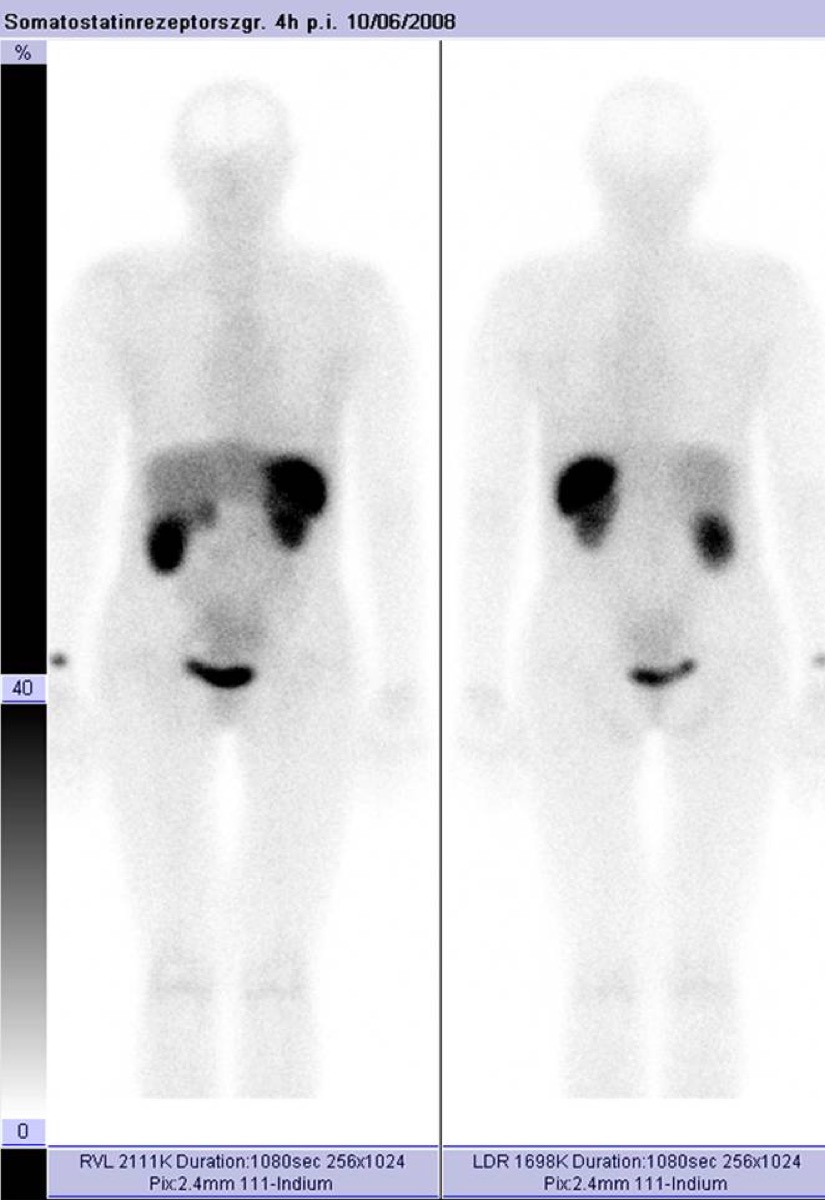
A neuroendocrine tumor patient has an OctreoScan showing intense uptake in the liver and multiple abdominal nodes. Which NEXT generation imaging modality has largely REPLACED OctreoScan for somatostatin receptor imaging due to superior sensitivity and resolution?
- AFDG PET/CT
- BTc-99m sestamibi SPECT
- CIn-111 DTPA-pentetreotide (higher dose)
- DGa-68 DOTATATE (or DOTATOC/DOTANOC) PET/CT
Show the answer and explanation
D. Ga-68 DOTATATE (or DOTATOC/DOTANOC) PET/CT
Ga-68 DOTATATE (Netspot) and related somatostatin receptor PET tracers have largely replaced In-111 OctreoScan for neuroendocrine tumor imaging. Advantages include: far superior sensitivity (detects smaller lesions); much better spatial resolution (PET vs. planar/SPECT); shorter exam time (2–3 hours vs. 24–48 hours); lower radiation dose; higher target-to-background ratio. Ga-68 DOTATATE is now the preferred imaging modality for staging, treatment selection, and monitoring of somatostatin receptor-positive NETs.
More pet and oncology images
 Deauville Score 1–2: Complete Metabolic Response
FDG-Avid Benign Disease: Infection and Inflammation Mimics
How SUV Is Calculated on FDG PET
FDG PET/CT Staging of Non-Small Cell Lung Cancer
Brown Fat Uptake on FDG PET
F-18 Half-Life and Decay Mode
All 130 nuclear medicine images by category →
Practise image interpretation in the app
All 130 images as an interactive quiz, alongside 500 NMTCB and ARRT(N) questions with worked explanations, case studies and timed mock exams. 25 questions are free, no card and no account.