Biliary Atresia on Neonatal HIDA Scan
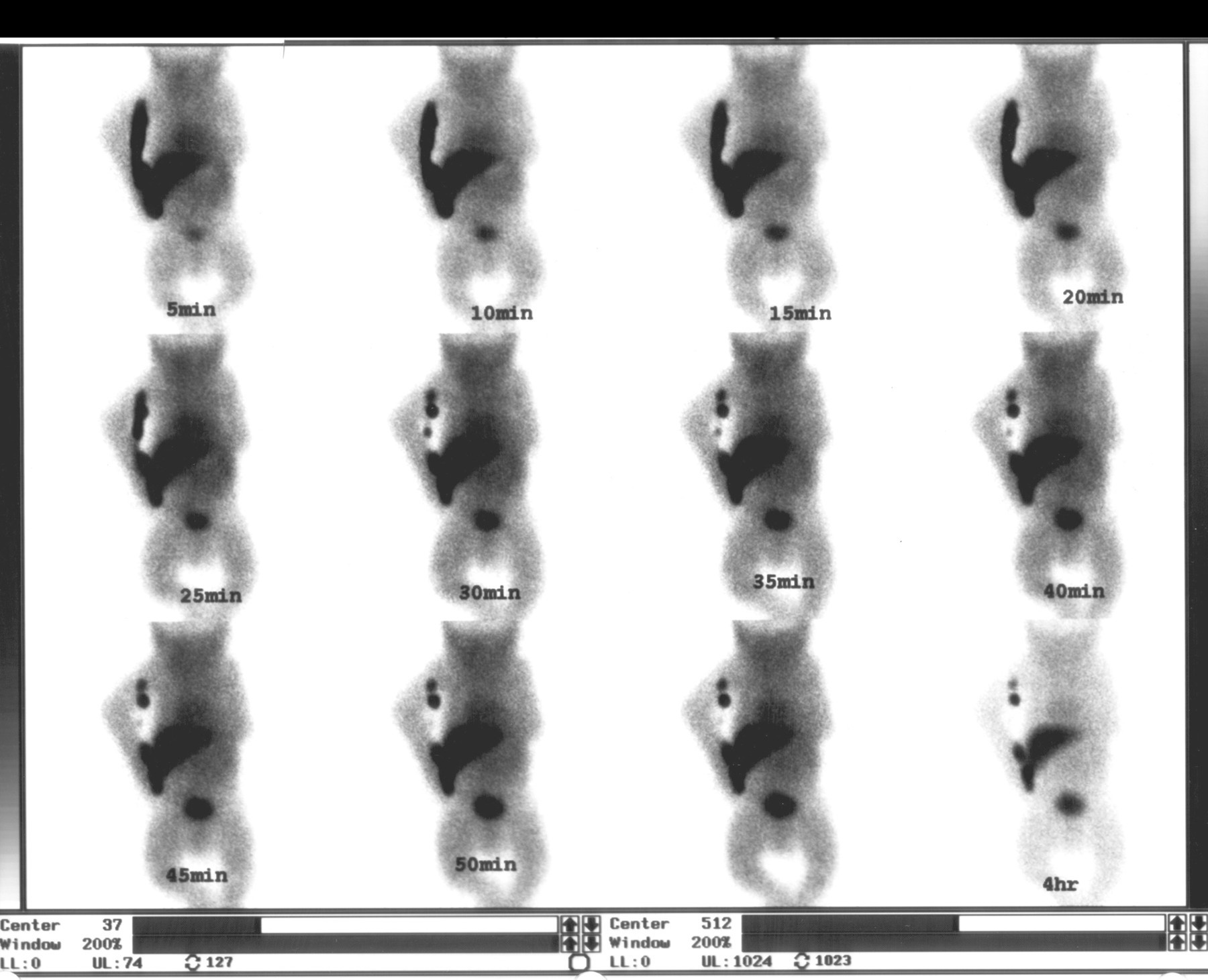
Provided clinical image
Question
A Tc-99m HIDA scan is performed in a jaundiced neonate to differentiate biliary atresia from neonatal hepatitis. The scan shows good hepatic uptake but NO excretion into the biliary system or bowel on 24-hour images. This pattern is MOST consistent with:
- ANeonatal hepatitis — diffuse hepatocellular dysfunction impairs IDA tracer processing, causing globally reduced hepatic extraction and delayed or diminished biliary excretion that may eventually appear on 24-hour images after phenobarbital pretreatment
- BNormal neonatal liver maturation — physiologic immaturity of hepatocyte organic anion transport (OATP1B1/B3 isoforms) transiently delays biliary IDA excretion until 6–8 weeks of age, mimicking pathologic obstruction on early imaging
- CBiliary atresia — absent biliary excretion into bowel despite hepatocyte uptake indicates complete biliary obstruction
- DCholedochal cyst — focal fusiform or cystic dilatation of the common bile duct creates a photopenic defect on delayed imaging with pooling of tracer within the cyst and eventual slow bowel transit, distinguishable from atresia by late excretion
Show the answer and explanation
C. Biliary atresia — absent biliary excretion into bowel despite hepatocyte uptake indicates complete biliary obstruction
HIDA scan is a key test for differentiating biliary atresia (BA) from neonatal hepatitis in jaundiced neonates: (1) In BILIARY ATRESIA: hepatocyte function is initially preserved (good hepatic uptake), but the obliterated bile ducts prevent any biliary excretion — absent bowel activity on 24-hour images despite hepatocyte uptake. (2) In NEONATAL HEPATITIS: hepatocyte function is impaired (poor or delayed hepatic uptake), but the biliary tree is patent — some delayed bowel activity may eventually appear. Pretreatment with phenobarbital (5 mg/kg/day × 5 days before scan) enhances bile production and improves test specificity. Absent bowel activity in BA is 100% sensitive; the Kasai procedure (hepatoportoenterostomy) must be performed before 60 days of age for best outcomes.
More hepatobiliary and gi images
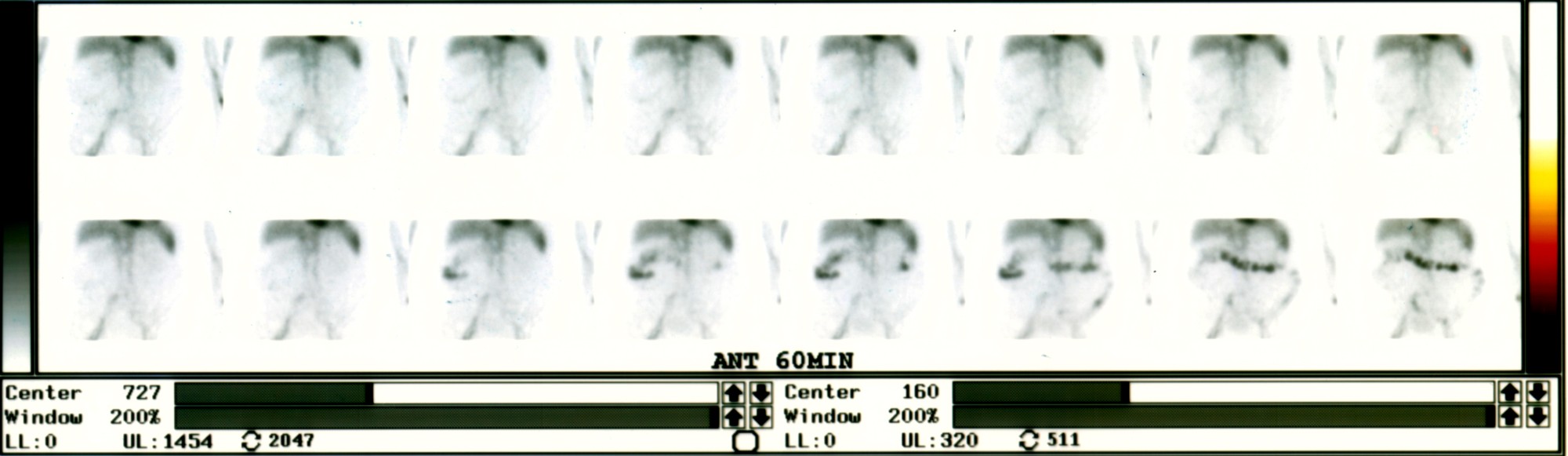 Active Lower GI Bleed on Tagged RBC Scan
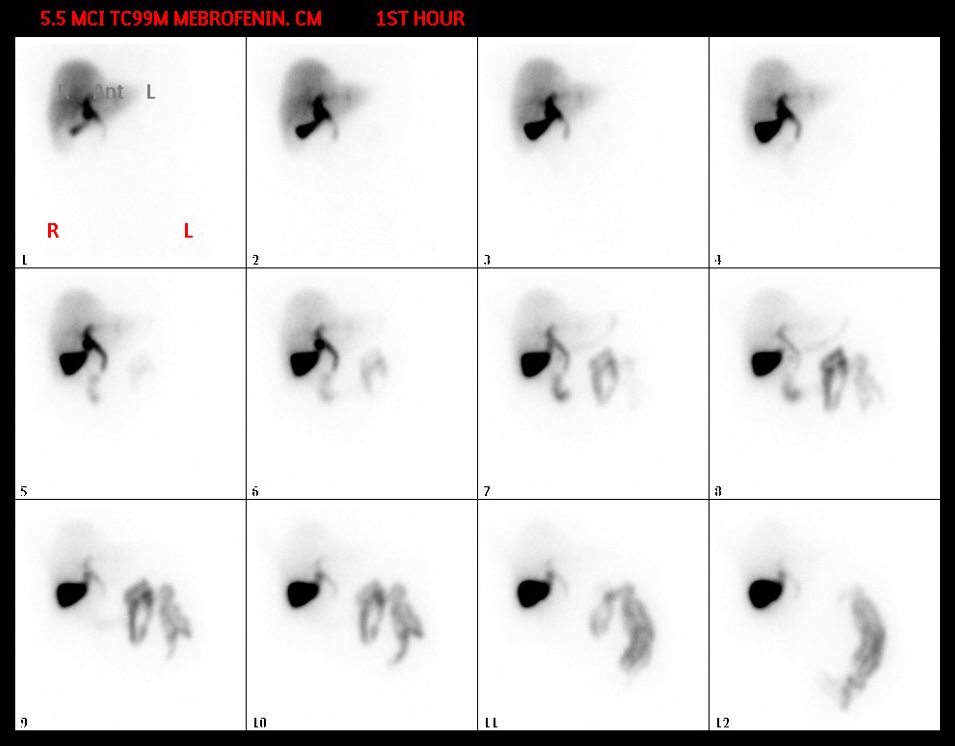 Normal Hepatobiliary Scan Sequence (Mebrofenin)
Patient Preparation for a HIDA Scan
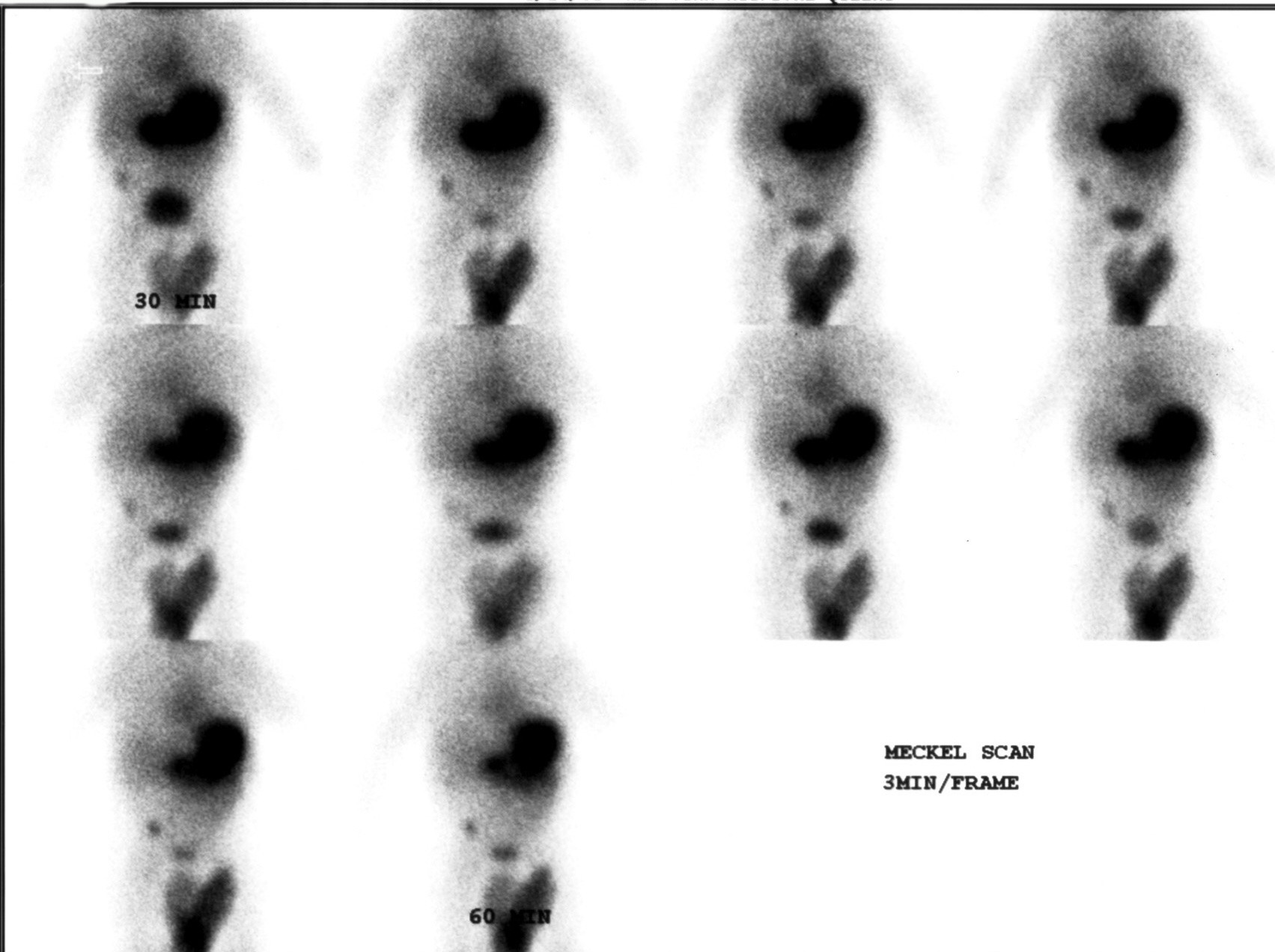 Meckel’s Diverticulum Scan with Tc-99m Pertechnetate
 Acute Cholecystitis on HIDA Scan with Morphine
 Low Gallbladder Ejection Fraction on CCK HIDA
All 130 nuclear medicine images by category →
Practise image interpretation in the app
All 130 images as an interactive quiz, alongside 500 NMTCB and ARRT(N) questions with worked explanations, case studies and timed mock exams. 25 questions are free, no card and no account.