Myocardial Perfusion Tracers: Sestamibi and Tetrofosmin
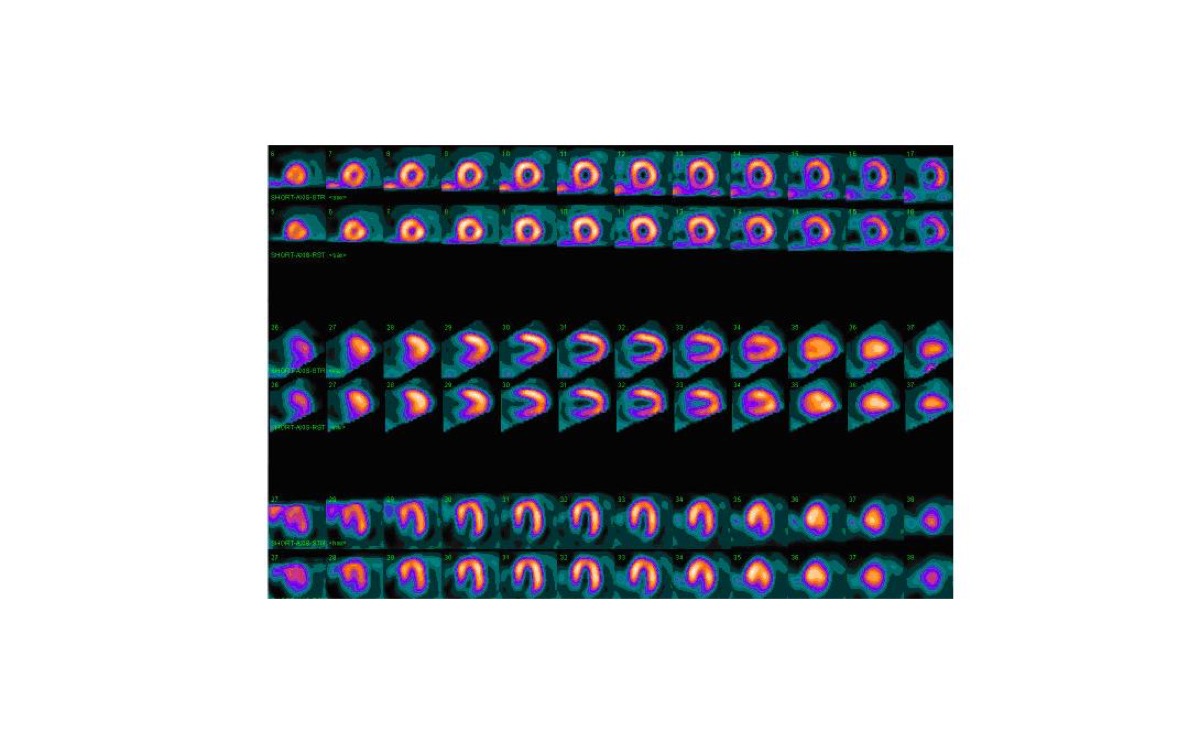
CC BY-SA 4.0 · Sincefalastrum / Wikimedia Commons · source file
Question
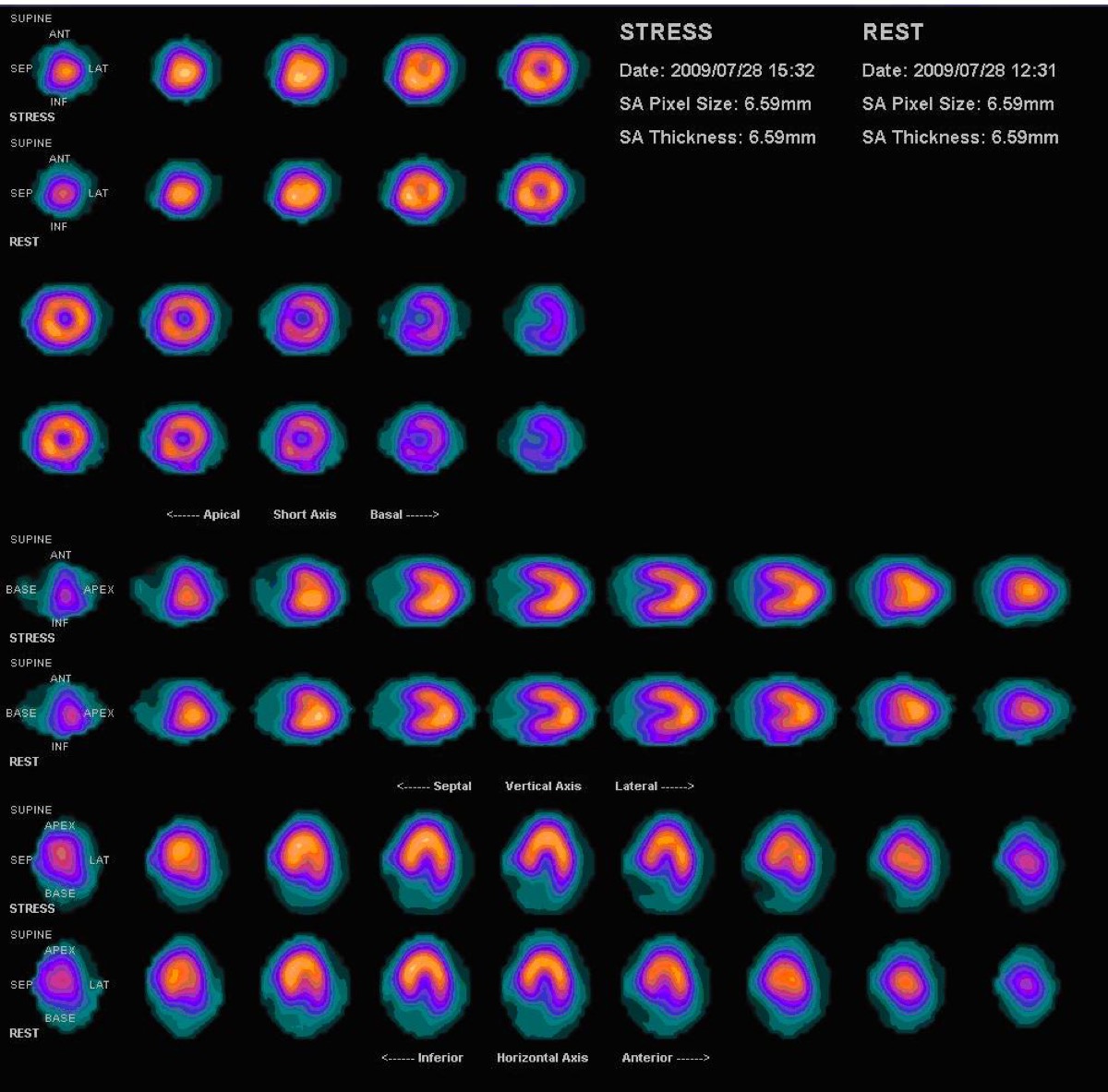
This myocardial perfusion scan is labeled as a normal study. Which radiopharmaceutical is most commonly used for myocardial perfusion SPECT in clinical practice?
- ATl-201 thallous chloride
- BTc-99m sestamibi (MIBI) or tetrofosmin
- CRb-82 chloride
- DN-13 ammonia
Show the answer and explanation
B. Tc-99m sestamibi (MIBI) or tetrofosmin
Tc-99m sestamibi (Cardiolite) and Tc-99m tetrofosmin (Myoview) are the most commonly used radiopharmaceuticals for myocardial perfusion SPECT. They are lipophilic cations retained in myocardial mitochondria proportional to blood flow. Rb-82 and N-13 ammonia are used for PET myocardial perfusion imaging. Tl-201 was the original agent but has been largely replaced by Tc-99m agents due to better imaging characteristics.
More cardiac imaging images
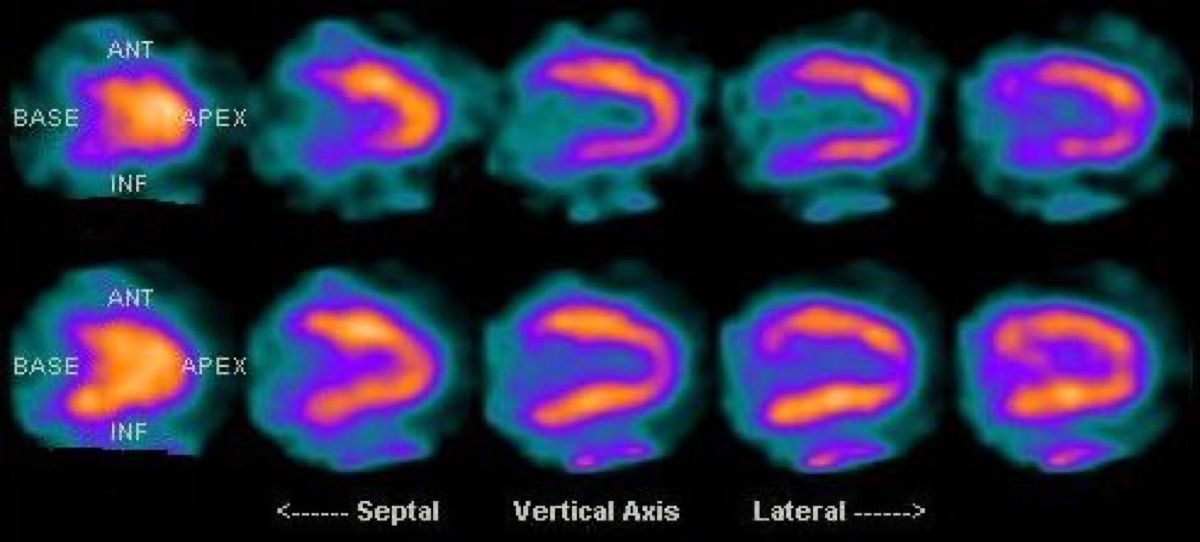 Diaphragmatic Attenuation Artifact on Cardiac SPECT
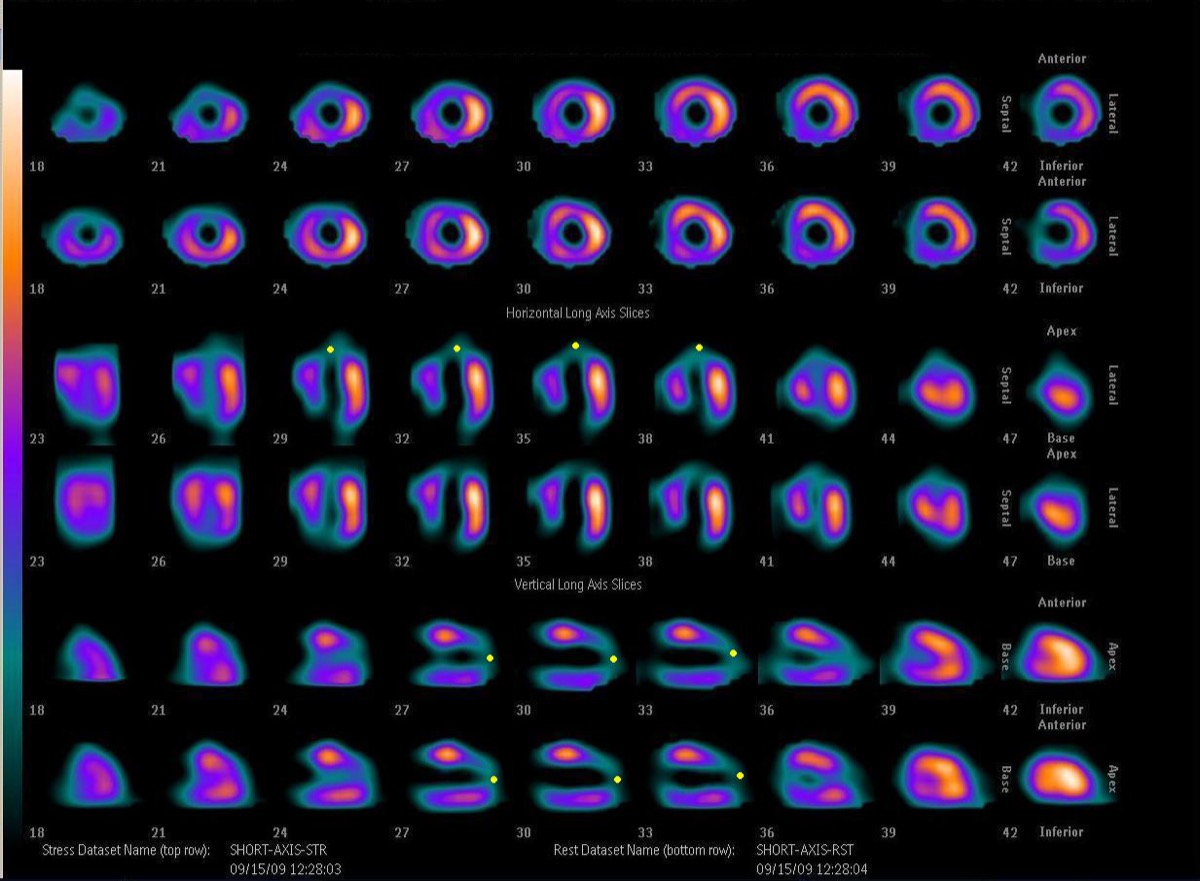 Fixed Perfusion Defect: Myocardial Scar on SPECT
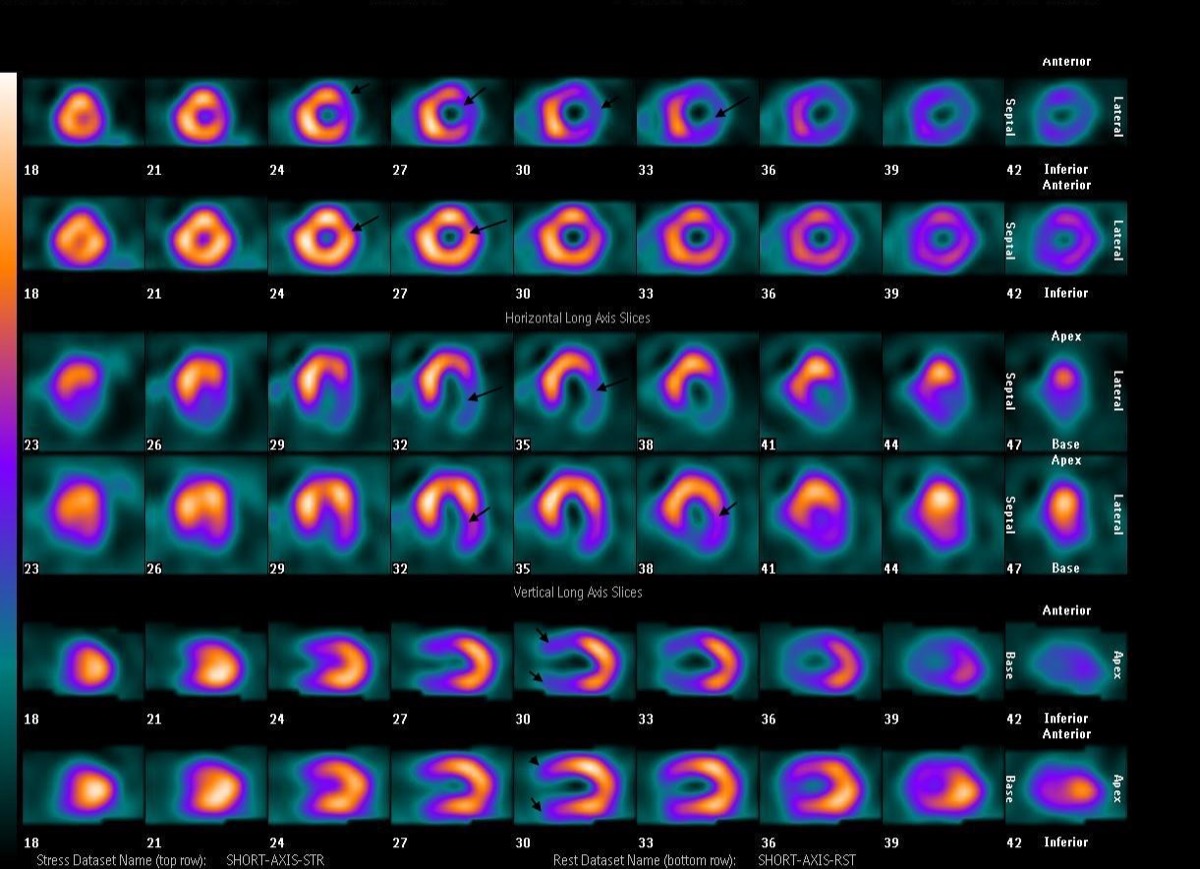 Reversible Lateral Wall Defect: Circumflex Ischemia
 Bull’s-Eye Polar Map: What the Center Shows
Anteroapical Fixed Defect: LAD Infarction on MPI
Transient Ischemic Dilation (TID) on Gated SPECT
All 130 nuclear medicine images by category →
Practise image interpretation in the app
All 130 images as an interactive quiz, alongside 500 NMTCB and ARRT(N) questions with worked explanations, case studies and timed mock exams. 25 questions are free, no card and no account.