Thyroid Stunning After Diagnostic I-131
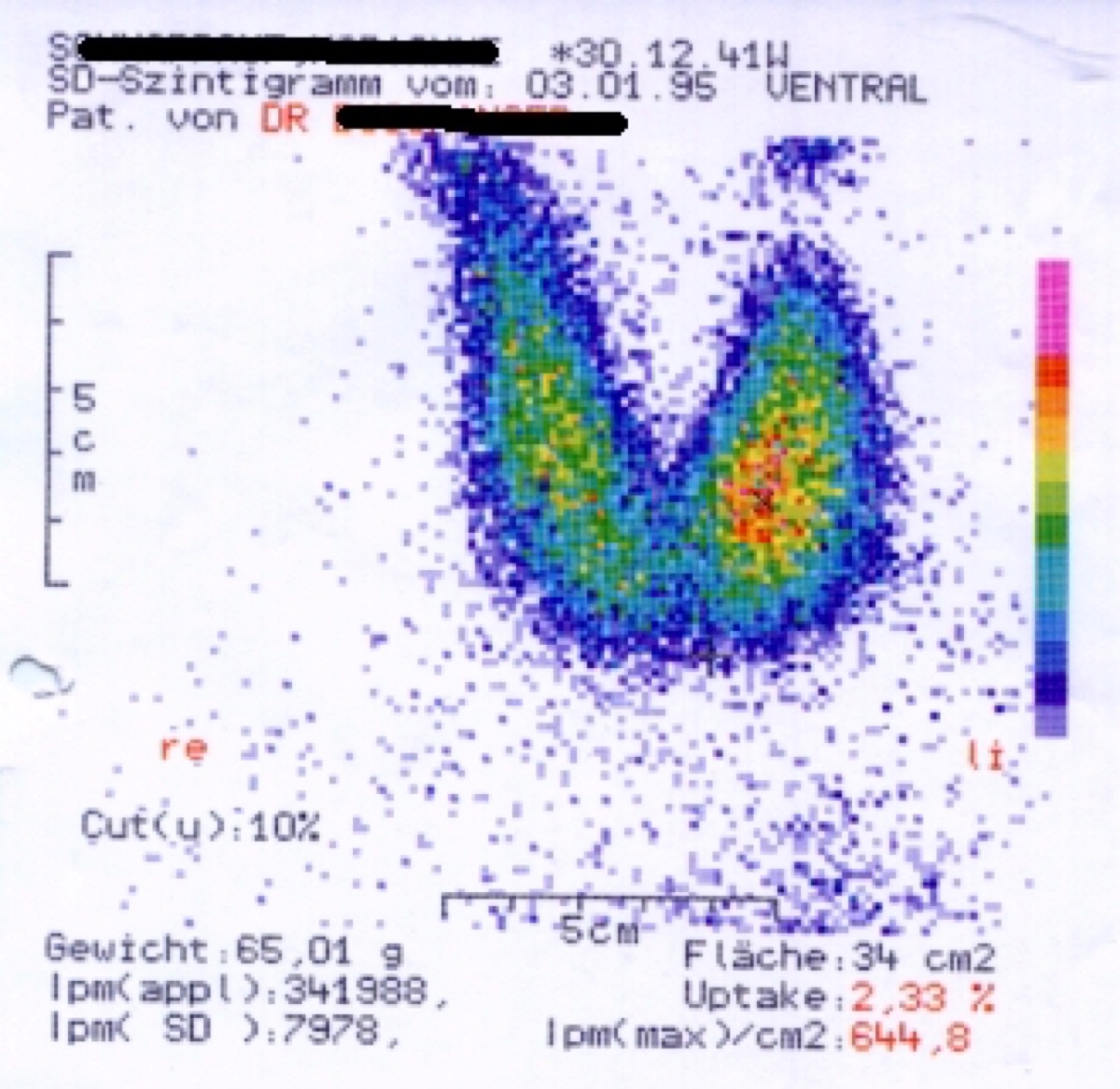
Public domain · Wikimedia Commons · source file
Question
A patient with thyroid cancer receives a large diagnostic dose of I-131 (5 mCi) before planned I-131 ablation therapy. The treating physician is concerned about 'thyroid stunning.' What is thyroid stunning and why is it clinically relevant?
- AThyroid stunning refers to complete thyroid ablation from the diagnostic dose
- BThyroid stunning is an allergic reaction to radioiodine
- CThyroid stunning refers to temporary suppression of TSH from radiation feedback
- DThyroid stunning is reduced iodine uptake (and potentially reduced therapy efficacy) in the thyroid remnant caused by prior radiation damage from the diagnostic I-131 dose
Show the answer and explanation
D. Thyroid stunning is reduced iodine uptake (and potentially reduced therapy efficacy) in the thyroid remnant caused by prior radiation damage from the diagnostic I-131 dose
Thyroid stunning refers to a transient reduction in iodine uptake (and potentially reduced therapy effectiveness) in thyroid tissue that results from radiation damage inflicted by the diagnostic I-131 dose. Large diagnostic doses (≥3 mCi) can stun the remnant, resulting in lower uptake during subsequent therapy and potentially decreased ablation efficacy. To minimize stunning: (1) use smaller diagnostic doses (≤1–2 mCi I-131) or prefer I-123 for pre-therapy dosimetric scanning; (2) proceed to therapy within 24–72 hours of diagnostic scan; (3) use recombinant TSH (Thyrogen) stimulation with I-123 for the diagnostic scan.
More thyroid and parathyroid images
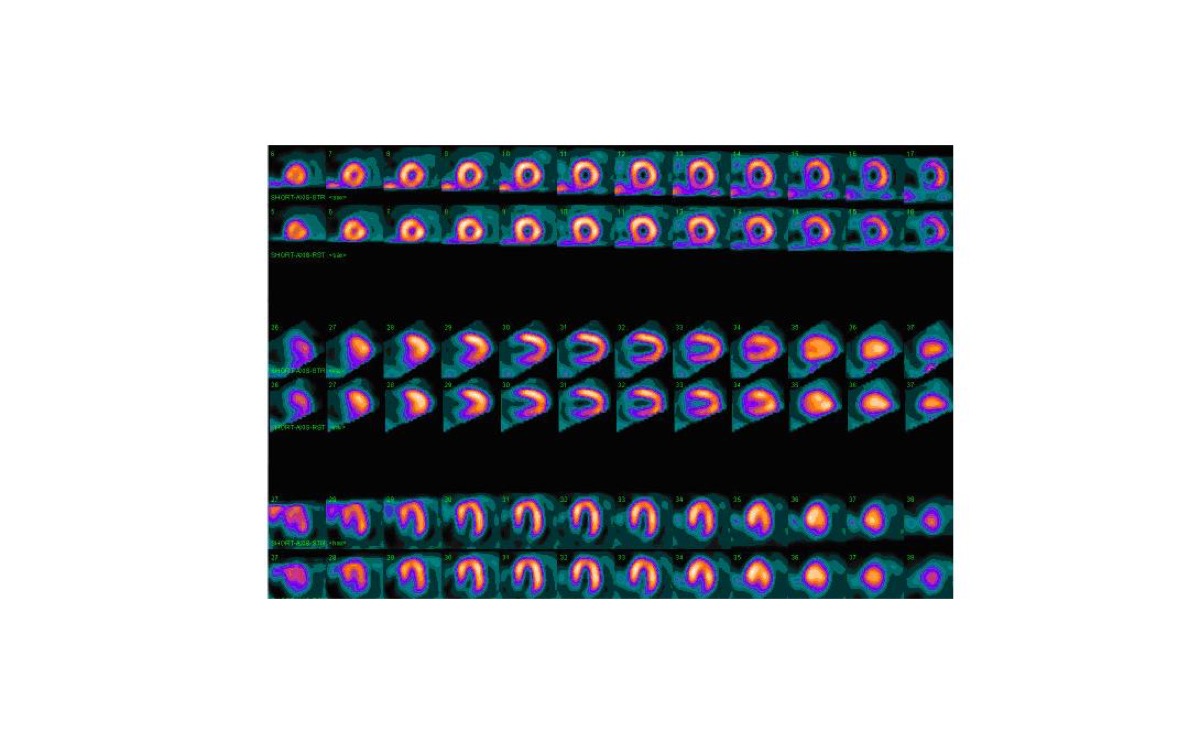 Parathyroid Adenoma on Dual-Phase Sestamibi Scan
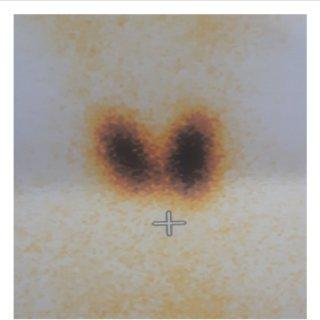 Graves’ Disease on Thyroid Scan
Hot Thyroid Nodule: Autonomous Function
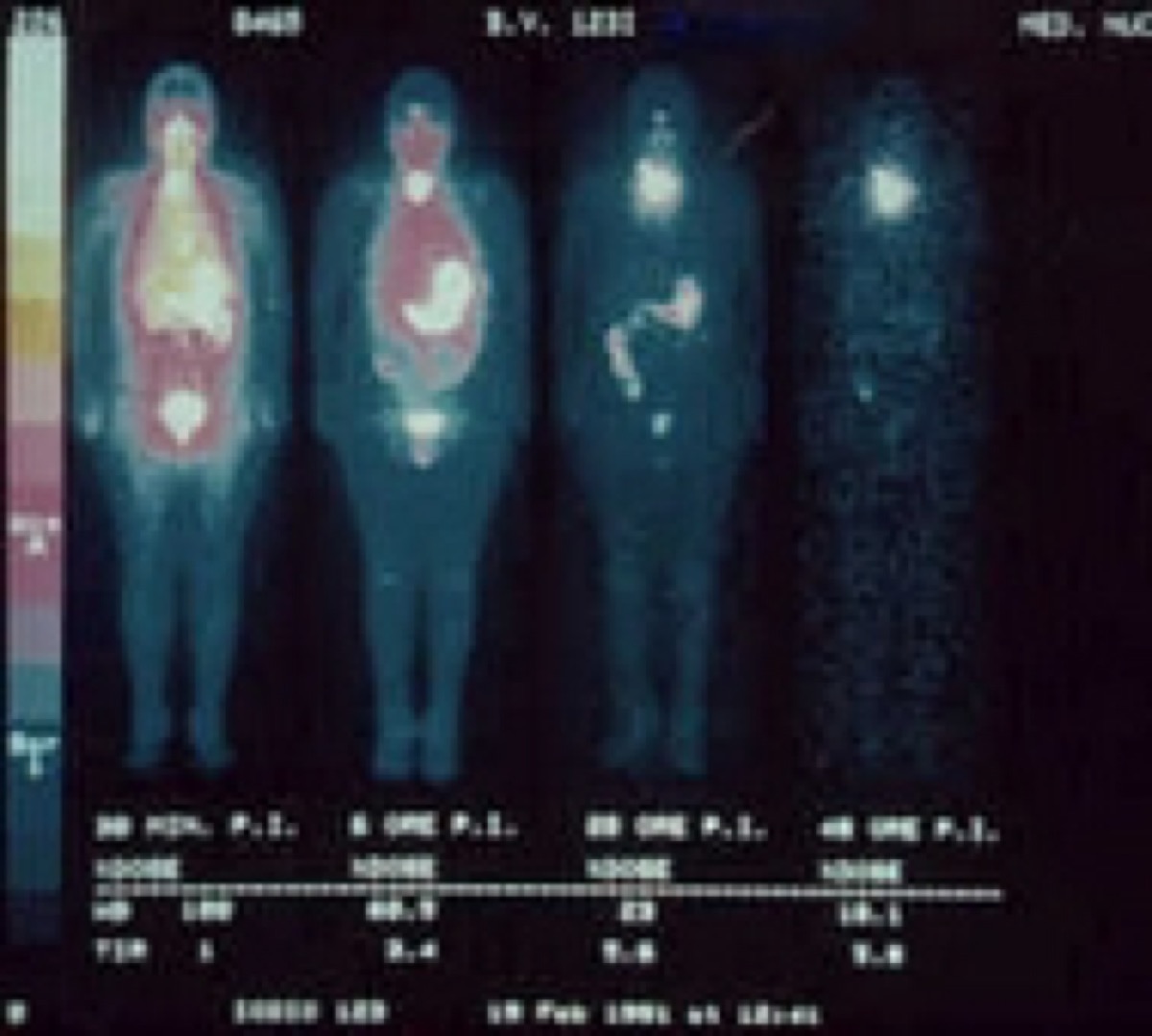 Why I-123 Is Used for Diagnostic Thyroid Imaging
I-131 vs I-123 for Post-Thyroidectomy Whole-Body Scans
Cold Thyroid Nodule: The Next Step
All 130 nuclear medicine images by category →
Practise image interpretation in the app
All 130 images as an interactive quiz, alongside 500 NMTCB and ARRT(N) questions with worked explanations, case studies and timed mock exams. 25 questions are free, no card and no account.