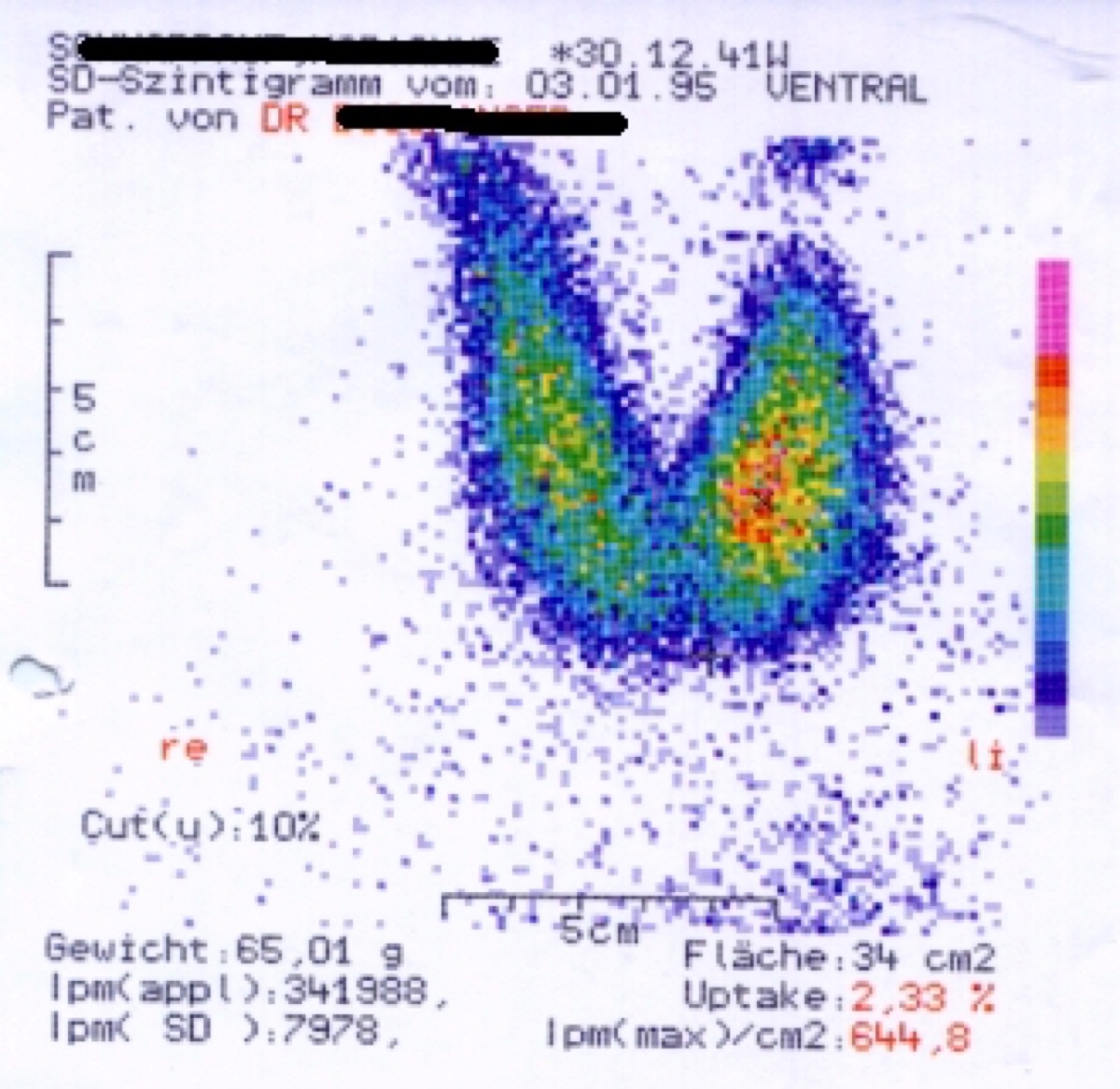
I-131 Dose Calculation for Graves’ Disease
Public domain · Wikimedia Commons · source file
Question
A patient with Graves' disease has a 24-hour RAIU of 65% and a thyroid gland weight estimated at 40 grams. I-131 therapy is planned with a target delivered dose of 150 µCi/gram. Using the basic dosimetry formula: Activity (µCi) = [Target dose × Gland weight] / RAIU, what is the approximate prescribed I-131 activity?
- AApproximately 9.2 mCi (9,230 µCi)
- BApproximately 3.9 mCi
- CApproximately 15.0 mCi
- DApproximately 0.9 mCi
Show the answer and explanation
A. Approximately 9.2 mCi (9,230 µCi)
Using the standard Quimby-Marinelli dosimetry formula: Activity (µCi) = [Target dose (µCi/g) × Gland weight (g)] / RAIU fraction = [150 µCi/g × 40 g] / 0.65 = 6,000 / 0.65 ≈ 9,230 µCi ≈ 9.2 mCi. The formula accounts for the fact that not all administered I-131 is retained in the gland — only the fraction equal to the RAIU is captured. Higher RAIU means more efficient uptake, so less activity is needed for the same delivered dose. Higher gland weight requires more activity for the same dose per gram. This calculation is a fundamental skill for nuclear medicine technologists.
More thyroid and parathyroid images
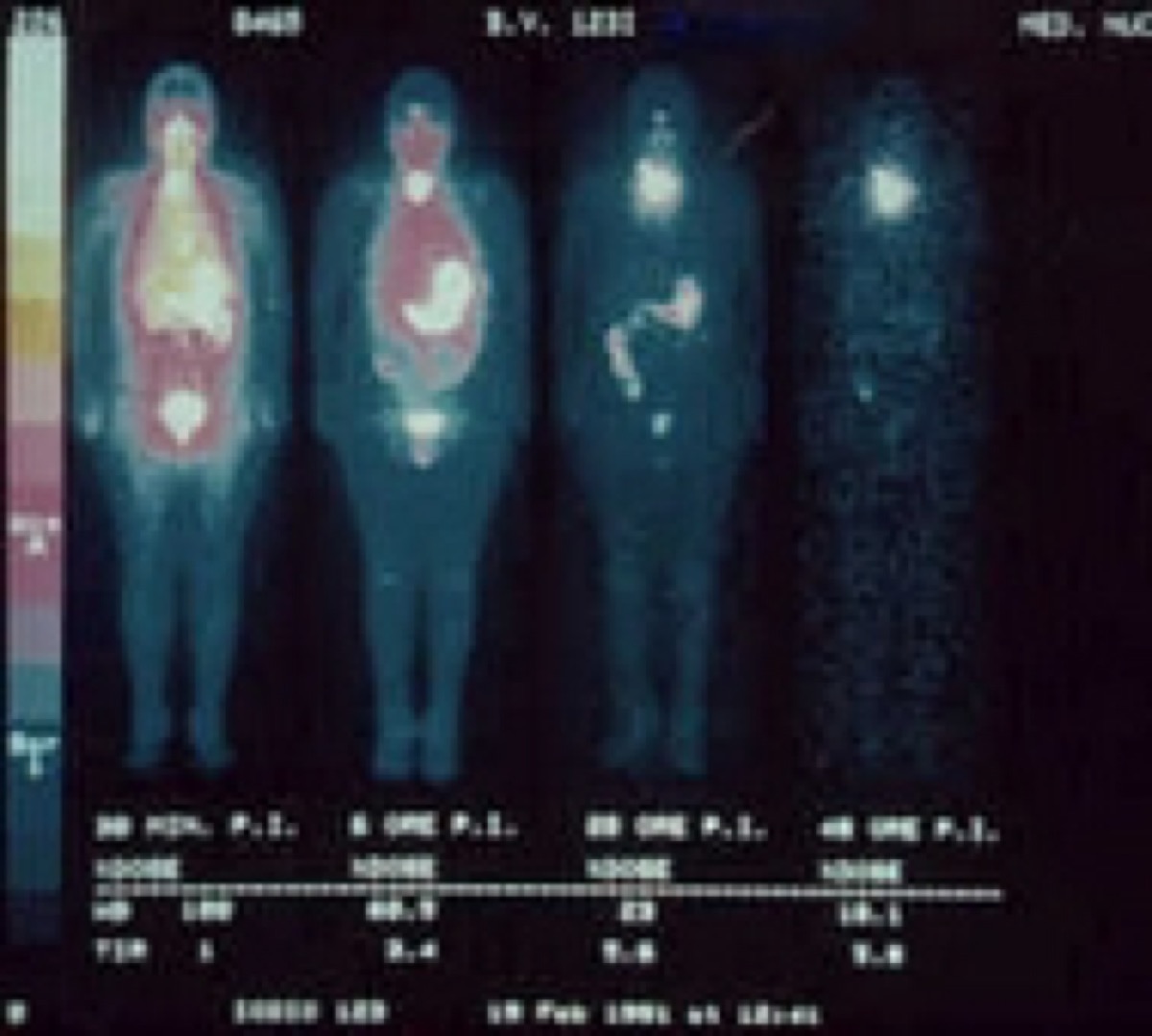 Normal Radioactive Iodine Uptake (RAIU) Range
 Thyroglobulin Monitoring After Thyroid Cancer Ablation
Thyroid Stunning After Diagnostic I-131
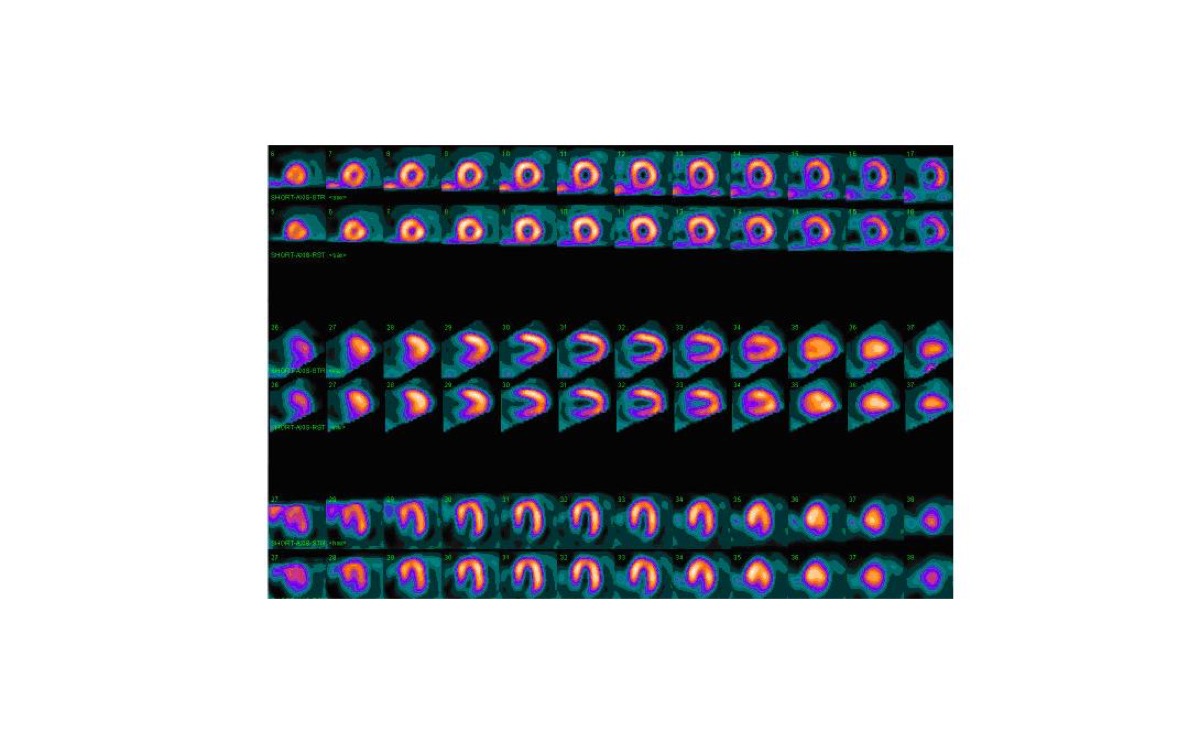 Parathyroid Adenoma on Dual-Phase Sestamibi Scan
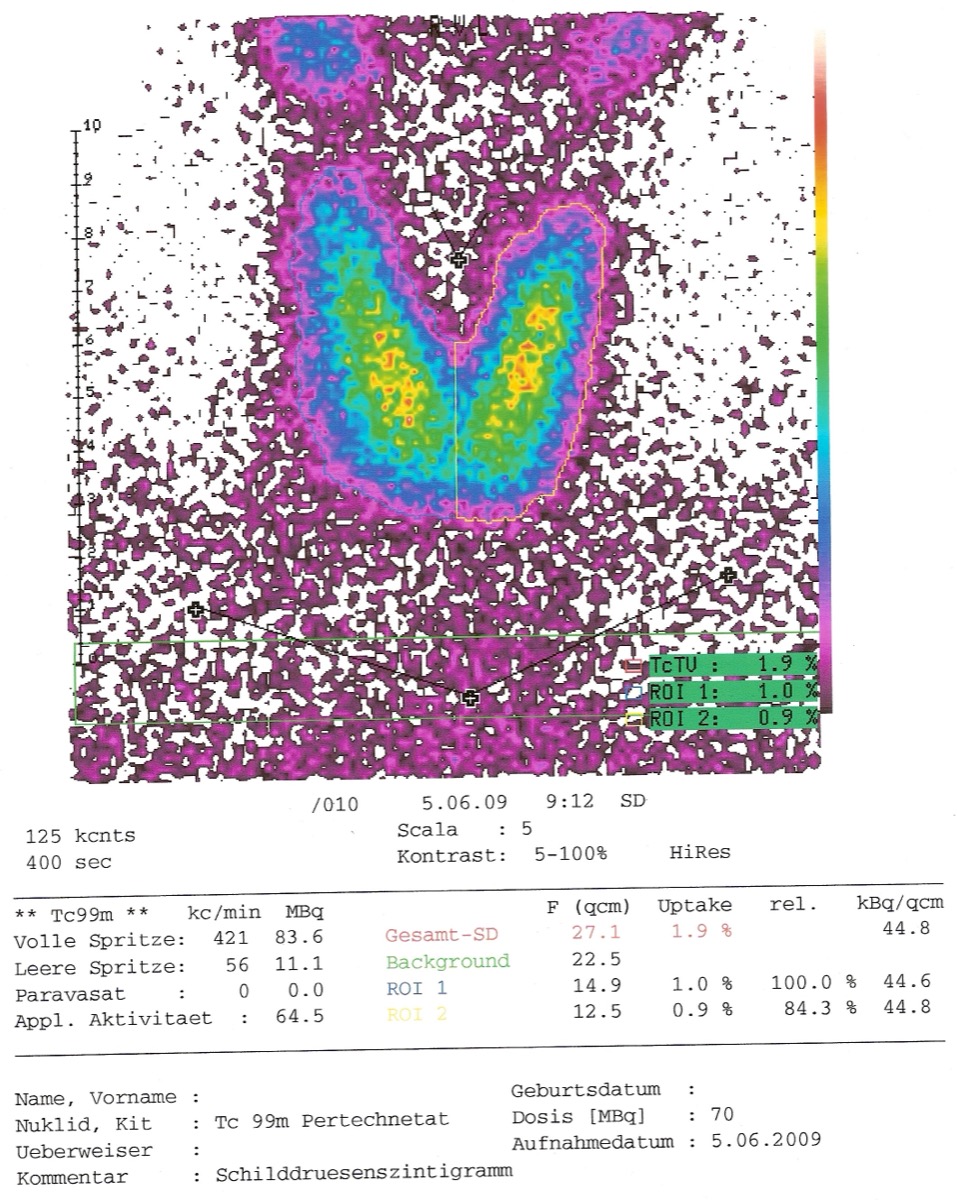
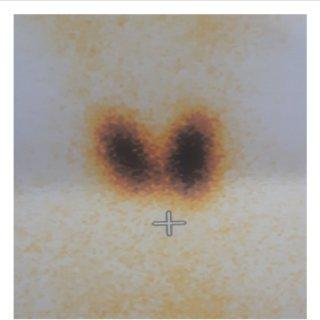 Graves’ Disease on Thyroid Scan
Hot Thyroid Nodule: Autonomous Function
All 130 nuclear medicine images by category →
Practise image interpretation in the app
All 130 images as an interactive quiz, alongside 500 NMTCB and ARRT(N) questions with worked explanations, case studies and timed mock exams. 25 questions are free, no card and no account.